Types of SEO Explained – A Complete Guide for Beginners
Published: 20 Aug 2025
Are you trying hard but still not getting visitors to your website? Maybe you are not using the right type of SEO. Many people only know one or two types, but there are more. Each type helps your website in a special way. Let’s learn them one by one in this simple guide. For basics, also check our detailed article on search engine optimization.
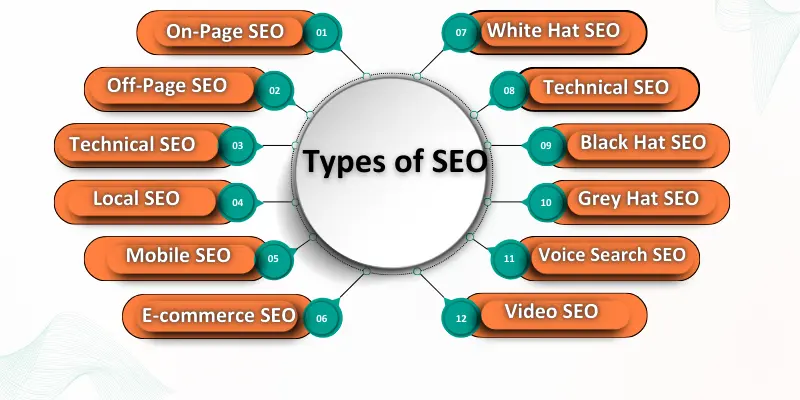
20 types of SEO
There are many types of SEO, and each one helps a website in a different way. Let’s take a quick look at the main types of SEO:
- On-Page SEO
- Off-Page SEO
- Technical SEO
- Local SEO
- Mobile SEO
- E-commerce SEO
- White Hat SEO
- Black Hat SEO
- Grey Hat SEO
- Voice Search SEO
- Video SEO / YouTube SEO
- International SEO
- Enterprise SEO
- Content SEO
- App Store SEO (ASO)
- Image SEO
- News SEO
- Negative SEO
- B2B SEO
- B2C SEO
On-Page SEO
On-page SEO helps us make our website better. We use it to help Google and people understand our page. It brings more free traffic to our site. It also makes our content easy to read and easy to find. We perform on-page SEO within the website. It includes these parts:
- Meta Title: The main title of the page.
- Meta Description: A short summary shown in search results.
- Headings: Titles and subheadings in the content.
- Keywords: Important words people search on Google.
- Images: Pictures with alt text and a small size.
- Internal Links: Links to other pages on your website.
- URL Structure: Short and clean page link with a keyword.
- Content Quality: Simple, clear, and useful writing.
Off-Page SEO
Off-page SEO refers to the work we do outside of our website. It helps our site become more popular and trusted. When other websites talk about us or link to us, Google thinks our site is useful. It helps our website rank higher. We use Off-Page SEO to bring more visitors and build a good name online.
Here are the main parts of Off-Page SEO:
- Backlinks: Links from other websites to your website.
- Social Sharing: When people share your content on social media.
- Guest Posting: Writing helpful articles for other websites.
- Online Reviews: Positive reviews on other sites help build trust.
- Influencer Mentions: When popular people talk about your website.
Technical SEO
Technical SEO means we fix the back-end parts of our website. These are things we can’t always see, but they help search engines read and understand our site better. When we do Technical SEO, our site works faster and becomes easier to use. It also helps Google crawl and index our pages properly.
Here are the main parts of Technical SEO:
- Website Speed: Fast websites make users happy.
- Mobile-Friendly Design: The site should look good on phones.
- Secure Connection (HTTPS): Keeps the site safe for users.
- XML Sitemap: Tells Google about all pages on the website.
- Robots.txt File: Guides search engines on what to check.
- Fixing Error: Solving broken links or page loading issues.
Local SEO
Local SEO helps people find your business in their area. It is useful for shops, schools, or services that operate in a single city or town. When someone searches for something “near me,” Local SEO shows your business in the results. It helps you get more visitors from your local area.
Here are the main parts of Local SEO:
- Google My Business (GMB): A free tool to show your business on Google.
- Local Keywords: Words that include your city or area name.
- Online Reviews: Good customer reviews help build trust.
- NAP Information: Your Name, Address, and Phone number must be correct everywhere.
- Local Listings: Your business info on different local websites
Mobile SEO
Mobile SEO means we make our website work well on mobile phones. Most people use phones to search online, so our site must look good and load fast on small screens. If the website is easy to use on a phone, more people will stay and read. It also helps the site rank better in mobile search results.
Here are the main parts of Mobile SEO:
- Responsive Design: The site fits well on all screen sizes.
- Fast Loading: Pages should open quickly on mobile networks.
- Easy Navigation: Menus and buttons must be simple to tap.
- Readable Text: The text should be large enough to read without needing to zoom in.
- Mobile-Friendly Test: A tool to check if your site works well on phones.
E-commerce SEO
E-commerce SEO helps online stores appear in Google search. It brings more people to your shop and helps you sell more products. If your store shows up in search results, more buyers can find what they need. This SEO type is designed for websites that sell products or services online.
Here are the main parts of E-commerce SEO:
- Product Page Optimization: Write clear titles and descriptions for each item.
- Unique Product Descriptions: Do not copy text; write something helpful and new.
- Image Alt Text: Add short text to explain product pictures.
- Category Pages: Organize your products in clear groups.
- Customer Reviews: Show honest reviews under your products.
White Hat SEO
White Hat SEO means using fair and honest ways to improve your website. We follow Google’s rules and give good value to people. This type of SEO helps websites grow slowly but safely. It also keeps your site safe from any kind of punishment or ban. People use White Hat SEO to build long-term success online.
Here are the main parts of White Hat SEO:
- Useful Content: Write helpful and original information.
- Right Keywords: Use words that match what people search.
- Clean Code: Make sure your website works well.
- Easy Navigation: Help users find things quickly.
- Proper Linking: Link only to trusted and related websites.
Black Hat SEO
Black Hat SEO uses tricks to get quick results in search engines. These methods go against Google’s rules. Some people use them to rank fast, but they are risky. If Google catches these tricks, it can remove your website from search results. Therefore, Black Hat SEO is not a safe approach for long-term success.
Here are the main parts of Black Hat SEO:
- Keyword Stuffing: Using the same word too many times.
- Hidden Text: Hiding words on the page that people can’t see.
- Paid Links: Buying links instead of earning them.
- Clickbait Titles: Writing titles that do not match the content.
- Copied Content: Using text from other websites.
Grey Hat SEO
Grey Hat SEO is a mix of good and risky methods. It is not fully right, and not fully wrong. Some people use it to get faster results without breaking all the rules. But it can still be dangerous if not done carefully. Google may not like these methods, even if they work for a while.
Here are the main parts of Grey Hat SEO:
- Click Exchange: People visit each other’s sites to increase traffic.
- Spinning Content: Changing words in copied text to make it look new.
- Too Many Backlinks: Creating lots of links in a short time.
- Old Domain Buying: Using old websites to pass link power.
- Fake Reviews: Posting reviews that are not real.
Voice Search SEO
Voice Search SEO helps your website show up when people speak to search engines. Many users now ask questions using their voice on phones or smart devices. So, websites must be ready for voice search. It helps you reach more people who use speech instead of typing.
Here are the main parts of Voice Search SEO:
- Question-Based Keywords: Use words like “what,” “how,” and “where.”
- Short Answers: Give clear and quick replies in your content.
- Natural Language: Write how people speak, not too formal.
- Mobile Optimization: Make sure your site works well on phones.
- Featured Snippets: Try to answer questions clearly to appear at the top of the search results.
Video SEO / YouTube SEO
YouTube SEO helps your videos show up in search results. It brings more people to your channel. When you use the right words and settings, your videos can get more views. This SEO type is great for those who share content through videos. It helps your video reach the right audience.
Here are the main parts of YouTube SEO:
- Video Title: Use clear and strong words in your title.
- Description: Add helpful details about the video topic.
- Use keywords to tell YouTube what your video is about.
- Thumbnail: Add a nice image that attracts clicks.
- Subtitles: Help viewers understand better and improve search reach.
International SEO
International SEO helps your website reach people in other countries. If you want to show your content to users from different places, this SEO type is very helpful. It makes sure your site works well in many languages and locations. It helps you grow your website across the world.
Here are the main parts of International SEO:
- Language Tags – Tell search engines which language your page uses.
- Country Targeting – Show the right version of your site to each country.
- Local Content – Use words and examples that match the country.
- Multiple Versions – Create pages in different languages.
- Correct URL Structure – Use country codes in links (like .uk or .fr).
Enterprise SEO
Enterprise SEO is for big websites that have many pages. These sites belong to large companies or brands. They need special SEO to manage and grow all pages together. It also helps keep the whole website fast, clear, and easy to find on Google. Enterprise SEO saves time and brings better results for large websites.
Here are the main parts of Enterprise SEO:
- SEO Automation: Use tools to update many pages quickly.
- Strong Site Structure: Keep all pages well-organized and organized.
- Team Work: SEO experts, writers, and developers work together.
- Page Templates: Use same layout for many similar pages.
- Data Tracking: Check how all pages are performing.
Content SEO
Content SEO means making your writing better for people and search engines. Good content helps your page rank higher and keeps visitors happy. When your content is clear, useful, and easy to read, more people will stay on your website. It plays a big role in improving your site’s traffic.
Here are the main parts of Content SEO:
- Helpful Information: Write answers people are looking for.
- Right Keywords: Use words people search for on Google.
- Simple Structure: Break text into short paragraphs and headings.
- Original Ideas: Share content that is not copied from others.
- Clear Format: Use bullet points, numbers, or lists when needed.
App Store SEO (ASO)
App Store Optimization, or ASO, helps mobile apps appear higher in app stores, such as Google Play or the Apple App Store. Just like websites use SEO, apps use ASO to get more downloads. ASO brings your app in front of the right people. It helps users find your app quickly and easily.
Here are the main parts of ASO:
- App Title: Choose a name that is clear and has keywords.
- Short Description: Write a line that tells what your app does.
- Keywords: Use the right words people search for in the app store.
- App Icon: Make a clean and attractive icon.
- Screenshots: Add helpful pictures that show how the app works.
Image SEO
Image SEO helps pictures on your website show up in Google Image Search. It also makes your website load faster and look better. When you use images the right way, they can bring more visitors to your site. It improves both search ranking and user experience.
Here are the main parts of Image SEO:
- File Name: Give your image a name that tells what it is (like blue-flower.webp).
- Alt Text: Add short text to explain what’s in the picture.
- WebP Format: Use .webp images because they are light and load faster.
- Small File Size: Keep image size low so your page opens quickly.
- Mobile Friendly: Make sure the image looks good on phones.
News SEO
News SEO helps news articles appear fast in Google News and other search engines. It is useful for websites that post daily updates, trending stories, or latest reports. This SEO type helps more people find and read your news quickly. It brings fast traffic to your latest news posts.
Here are the main parts of News SEO:
- Clear Headlines: Use simple and direct titles for news articles.
- Fresh Content: Post new updates often to stay active.
- Date and Time: Always show the publish time on each article.
- Structured Data: Add special code to help Google read your news properly.
- Reliable Source: Make sure your news is true and trustworthy.
Negative SEO
Negative SEO means someone tries to hurt another website’s ranking on purpose. It is not good or fair. People do it to damage their competitors’ websites and take their place in search results. Google does not like this, and it can be dangerous. It is important to stay safe from Negative SEO.
Here are the main parts of Negative SEO:
- Bad Backlinks: Sending many spammy links to your site.
- Fake Reviews: Posting lies to lower your website’s trust.
- Copying Content: Stealing your text and using it on other websites.
- Overloading the Server: Making your website slow or crash.
- Reporting False Spam: Telling Google fake things about your site.
B2B SEO
B2B SEO helps one business reach other businesses online. It is different from selling to normal people. In B2B SEO, the goal is to get companies to visit your website and trust your services or products.
It helps grow professional connections and long-term deals.
Here are the main parts of B2B SEO:
- Professional Keywords: Use words that other companies search.
- Informative Blog Posts: Share expert tips to build trust.
- Case Studies: Show how your service helped other businesses.
- Contact Pages: Make it easy for companies to reach you.
- LinkedIn Sharing: Post your content on business platforms like LinkedIn.
B2C SEO
B2C SEO helps businesses reach regular people who want to buy products or services. It focuses on making websites fun, easy, and helpful for everyday customers. This SEO brings more people to your site and turns them into buyers. It helps grow online sales and brand trust.
Here are the main parts of B2C SEO:
- Simple Keywords: Use words people type when shopping online.
- Attractive Titles: Write headlines that catch the reader’s eye.
- Easy Navigation: Make sure customers find things quickly.
- Product Pages: Add good pictures, prices, and short info.
- Customer Reviews: Show real feedback to build trust.
Conclusion
So, friends, it’s time to wrap up! We have learned about the types of SEO in a fun and simple way. I hope you found it useful and easy to understand. My advice? Start with On-Page SEO — it’s the easiest to apply and gives great results. Don’t wait — try using these tips on your website today and see the difference. If you liked this guide, feel free to share it with others who are also learning SEO.
FAQs about Types of seo
Here are some common questions about types of seo:
Each type of SEO has a different job. Some focus on the website itself, while others work outside the site, and some assist with mobile or local results. Using all types together gives better results.
You can start with On-Page SEO. It is easy to understand and gives fast results. You can later move to Off-Page and Technical SEO..
White Hat SEO is the safest type. It follows Google’s rules and brings long-term success. It may be slow, but it keeps your site secure.
You should check your SEO every few weeks. Update old content and fix any problems. Regular updates help your website stay strong in search results.

- Be Respectful
- Stay Relevant
- Stay Positive
- True Feedback
- Encourage Discussion
- Avoid Spamming
- No Fake News
- Don't Copy-Paste
- No Personal Attacks
- Be Respectful
- Stay Relevant
- Stay Positive
- True Feedback
- Encourage Discussion
- Avoid Spamming
- No Fake News
- Don't Copy-Paste
- No Personal Attacks
