Types of email marketing
Published: 01 Sep 2025
Why do some emails only share news while others ask you to buy something? The reason is that there are different types of email marketing. Each type has its own purpose, like sending updates, selling products, or giving reminders. In this guide, you will learn about these types of email campaign in detail. To explore the basics, check out our complete guide on Email Marketing.
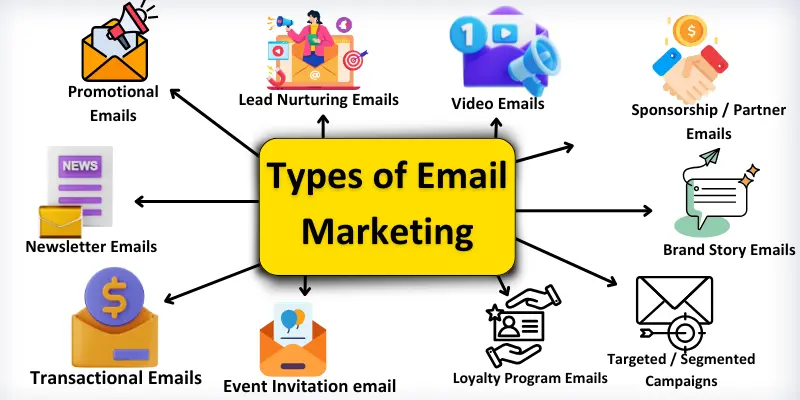
Different Types of Email Marketing
There are many types of emails in email marketing that businesses use to talk with people. Each type serves a distinct purpose and contributes in a different way. Here are some types of email marketing messages.
- Promotional Emails
- Newsletter (Digest) Emails
- Transactional Emails
- Welcome Series (Drip Emails)
- Lead Nurturing Emails
- Re-engagement / Win-Back Emails
- Milestone Emails
- Educational / How-To / Inspiration Emails
- Seasonal / Holiday Emails
- Storytelling / Brand Story Emails
- Abandoned Cart / Browse Emails
- Upsell & Cross-Sell Emails
- Loyalty Program Emails
- Sponsorship / Partner Emails
- Event Invitation & Follow-Up Emails
- Targeted / Segmented Campaigns
- Interactive Emails
- Cold Emails
- Video Emails
- Opt-in Emails
- Opt-out Emails
Let’s discuss types of email marketing campaigns in detail.
Promotional Emails
Promotional emails are messages that talk about sales and offers. Businesses send these emails to tell people about new products. They also share discounts and special deals. The goal is to make people buy something. These emails are short, clear, and easy to read.
A clothing store sends an email that says, “Get 30% off on all winter clothes this week!” It is a promotional email.
Newsletter emails
Newsletter emails help companies share news and updates. They are a way to give helpful information to people. These emails can include tips, stories, or small lessons. The main goal is to keep in touch with readers.
A school sends a monthly email that shows exam dates, holiday plans, and study tips for students. It is a newsletter email.
Transactional Emails
Transactional emails are sent after someone takes an action. They give important details to the customer. These emails are not for selling, but for sharing useful information. People trust them because they come at the right time.
After you buy a book online, you get an email with your order number and delivery date. It is a transactional email.
Welcome Series (Drip Emails)
Welcome emails are the first messages a new subscriber gets. They make people feel special and introduce the company. These emails create a good first impression. A welcome series can also guide people on what to do next.
When you sign up for an online course, you get a welcome email that says, “Thanks for joining! Here is how to start your first lesson.” It is a welcome email
Lead Nurturing Emails
Lead nurturing emails are messages sent to people who are interested but not ready to buy yet. These emails share helpful tips, guides, or offers to build trust. They slowly help the customer move closer to buying.
If you download a free eBook from a fitness website, you may later receive emails like “Here are 5 easy exercises for beginners.” These are lead-nurturing emails
Re-engagement / Win-Back Emails
Re-engagement emails are messages sent to customers who have stopped opening or clicking emails. The goal is to bring them back with a special offer, reminder, or friendly note. These emails say, “We miss you!” and try to win back attention.
An online store may send an email like “It’s been a while! Here’s 20% off on your next order.” It is a win-back email.
Milestone Emails
Milestone emails are special messages that celebrate important steps in a customer’s journey. They make customers feel valued and appreciated. These emails build strong relationships by celebrating small and big moments.
A company may send an email saying, “Happy 1-year anniversary with us! Thanks for being part of our family.” It makes the customer feel special.
Educational / How-To / Inspiration Emails
These emails share useful knowledge, tips, or step-by-step guides. The goal is to teach something new or inspire customers to take action. Educational emails also build trust because customers feel the company is helping them learn.
A skincare brand may send an email saying, “5 easy steps to protect your skin in winter.” It helps customers and makes them more likely to buy the products.
Seasonal / Holiday Emails
These emails are sent during special seasons or holidays like the New Year, Eid, Christmas, or Black Friday. The purpose is to connect with the celebratory mood and offer customers special discounts, gifts, or promotions. Seasonal emails also make customers feel the brand cares about their happiness.
A clothing store may send an Eid email saying, “Celebrate Eid with 20% off on all new arrivals. Shop today and make your festival special!”
Storytelling / Brand Story Emails
These emails are used to share a story about the brand, its journey, or the people behind it. Instead of only selling products, these emails connect with emotions. A good story helps customers trust the brand and feel part of it.
A skincare company may send an email saying, “Our founder started this brand after struggling with skin problems. Today, we create natural products to help people feel confident in their own skin.”
Abandoned Cart / Browse Emails
Sometimes, people visit a website, add products to their cart, or look at items, but they don’t buy them. Abandoned cart or browse emails are sent to remind customers about these products. These emails often include product pictures, discounts, or friendly messages to bring the customer back.
An online clothing store may send an email: “Hi Sarah, your favourite dress is still waiting in your cart! Order now before it sells out.”
Upsell & Cross-Sell Emails
Upsell and cross-sell emails are special emails that suggest more products to customers.
- Upsell means offering a better or upgraded version of the product they already bought.
- Cross-sell means suggesting related products that go well with their purchase.
These emails not only help businesses increase sales but also give customers better choices.
A mobile store sends an email: “You bought a smartphone! Would you like to add wireless earbuds for a better experience?
Loyalty Program Emails
Loyalty program emails are sent to thank customers for their repeat business. These emails often show points, rewards, or special offers. They help customers feel appreciated and encourage them to keep buying.
A coffee shop may send an email: “Hi Alex! You have 50 points. Redeem them for a free coffee today!” It is a loyalty program email.
Sponsorship / Partner Emails
These emails are sent when a company works with another brand or partner. They share offers, events, or special deals together. The goal is to give extra value to customers and reach more people through collaboration.
A coffee brand partners with a chocolate company and sends an email: “Get 10% off when you buy coffee and chocolate together this week
Event Invitation & Follow-Up Emails
Event emails are sent to invite people to events like webinars, workshops, or special sales. After the event, follow-up emails thank the attendees or share important updates. These emails help companies stay connected and make customers feel included.
A company may send an email: “You are invited to our free online workshop on healthy cooking. Join us this Saturday at 3 PM!” After the event, they may follow up with: “Thank you for joining! Here is the recipe guide from the session.”
Targeted / Segmented Campaigns
Targeted or segmented emails are sent to specific groups of people based on their interests, location, or behaviour. Companies use these emails to send more relevant messages, which makes customers more likely to read and act.
A shoe brand may send an email only to women saying, “Check out our new summer collection for women. Limited stock available!” It is a targeted email.
Interactive Emails
Interactive emails let customers take actions inside the email itself. People can click buttons, answer questions, or even fill out forms without leaving the email. These emails make reading more fun and help businesses get quick responses.
A travel company may send an email with a poll: “Which destination do you want to visit next? Click to vote!” It is an interactive email.
Cold Emails
Cold emails are sent to people who have never contacted the company before. The goal is to introduce the brand and start a conversation. These emails are polite and try to get the reader interested without being pushy.
A new online course platform may send an email saying, “Hi! We help people learn digital marketing online. Check out our free trial today!” It is a cold email.
Video Emails
Video emails are messages that include a video inside the email. They help explain things faster and make the email more interesting. Videos can show how to use a product, tell a story, or share a message in a fun way.
A cooking website may send an email with a video: “Watch how to make a chocolate cake in 5 easy steps!” It is a video email.
Opt-in Emails
Opt-in emails are sent only to people who agree to receive messages. This way, customers give permission, and emails reach people who really want them. Opt-in emails build trust and show respect for privacy.
A blog may ask: “Sign up for our newsletter to get weekly tips on healthy eating.” When someone signs up, they receive an opt-in email to confirm their subscription.
Opt-out Emails
Opt-out emails give people a choice to stop receiving emails from a company. These emails are polite and respectful. They help customers feel safe and build trust because they control what messages they get.
An online store may send an email saying, “You can update your email preferences or unsubscribe anytime by clicking here.” It is an opt-out email.
Conclusion
So, friends, it’s time to wrap up! We have discussed the different Types of Email Marketing and how each one can help your business grow. I personally recommend starting with welcome emails and newsletters to build trust with your customers. Try to use the right type for the right purpose. Start planning your email strategy today and see the difference it makes!
Common Queries about types of email marketing
These are the top questions people ask about types of email marketing.
Email marketing helps companies send messages directly to people. They can share offers, news, or tips. It helps businesses connect with customers easily.
Each type has a special purpose. Some emails sell products, while others teach or inform. Using the right type keeps customers interested and trusting the brand.
Yes! Promotional emails show discounts, new products, or deals. They encourage people to buy quickly. They are short, clear, and easy to read.
Newsletters give updates, tips, or useful information to readers. They are not meant mainly to sell. People enjoy them because they learn something new.
Transactional emails are sent after someone takes action, like buying a product. They include order details, confirmations, or receipts. People trust them because they are timely and helpful.
Welcome emails greet new subscribers and introduce the company. They make people feel special and appreciated. They also create a strong first impression.
Look at your goal and audience first. Use educational or storytelling emails to teach, and promotional emails to sell. Choosing the right type makes your campaigns effective.

- Be Respectful
- Stay Relevant
- Stay Positive
- True Feedback
- Encourage Discussion
- Avoid Spamming
- No Fake News
- Don't Copy-Paste
- No Personal Attacks
- Be Respectful
- Stay Relevant
- Stay Positive
- True Feedback
- Encourage Discussion
- Avoid Spamming
- No Fake News
- Don't Copy-Paste
- No Personal Attacks
