Difference between Branding and Marketing
Published: 18 Nov 2025
Did you know that 89% of consumers remain loyal to brands that share their values? Understanding the difference between branding and marketing is crucial for any business that wants to build long-term trust while driving sales. While marketing campaigns focus on short-term results and promotions, a branding strategy shapes the overall brand identity and perception of your business in the minds of your audience. Strong brand awareness and consistent messaging help companies stay memorable, while effective marketing techniques ensure products and services reach the right customers at the right time.
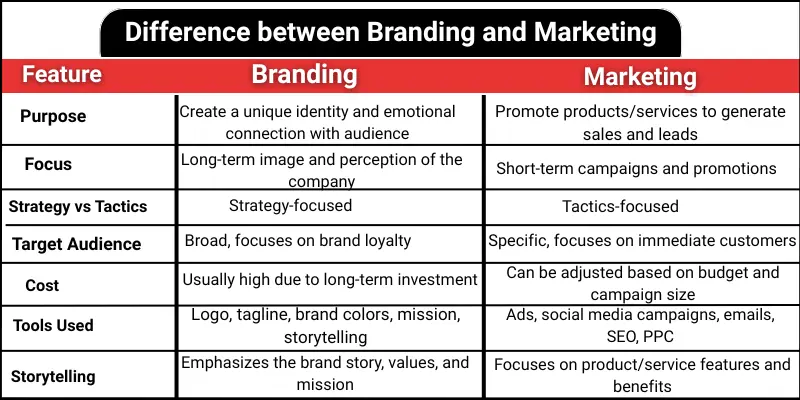
Let’s cover all the differences between branding vs marketing in detail.
What is the Difference between Branding and Marketing?
Understanding the difference between branding and marketing is essential for any business looking to grow. While both work together, they serve distinct purposes in shaping a company’s success. Here are some differences between branding and marketing
- Purpose
- Focus
- Duration
- Strategy vs Tactics
- Target Audience
- Emotional Connection
- Consistency
- Measurability
- Cost
- Tools Used
- Storytelling
- Communication Style
1. Purpose
The main purpose of branding and marketing is different. Both are important, but they work in different ways.
Branding:
Branding helps a business create its own identity. It shows who the company is and what it stands for. Branding builds trust with customers. People remember a brand because of its logo, colors, and message.
Marketing:
Marketing focuses on selling products or services to customers. It tells people about offers and deals. Marketing helps a business reach more customers. It encourages people to buy or use the product now.
2. Focus
Branding and marketing examine different aspects. Focus tells us where each one puts its energy.
Branding:
Branding focuses on the whole image of the company. It works on how people see the brand. Branding cares about feelings and trust. It makes the brand strong in people’s minds.
Marketing:
Marketing focuses on specific products or services. It works on selling and promoting them. Marketing cares about attracting customers now. It tries to make people buy or act quickly.
3. Duration
Branding and marketing work for different lengths of time. Duration shows how long each one lasts.
Branding:
Branding works for a long time. It builds the company’s image slowly. Branding keeps customers connected for years. It does not change quickly.
Marketing:
Marketing works for a short time. It focuses on campaigns or offers. Marketing changes often to match new goals. It tries to get results fast.
4. Strategy vs Tactics
Branding and marketing follow different plans. Strategy and tactics tell us how they work.
Branding:
Branding focuses on strategy. It plans for the long-term success of the company. Branding decides how the brand will grow and stay strong. It guides all company actions.
Marketing:
Marketing focuses on tactics. It plans short-term actions to sell products. Marketing chooses ads, promotions, and campaigns. It works step by step to reach customers quickly.
5. Target Audience
Branding and marketing speak to different groups of people. The target audience shows who they try to reach.
Branding:
Branding focuses on everyone who may know the company. It builds a connection with loyal customers. Branding tries to make the brand liked by many people. It looks at long-term relationships with customers.
Marketing:
Marketing focuses on people who can make a purchase now. It chooses specific customers for each campaign. Marketing tries to convince them to act quickly. It targets the right people at the right time.
6. Emotional Connection
Branding and marketing connect with people in different ways. Emotional connection shows how they make people feel.
Branding:
Branding creates feelings about the company. It makes people trust and like the brand. Branding focuses on love, loyalty, and strong memories. It stays in customers’ hearts for a long time.
Marketing:
Marketing creates interest in products or services. It makes people excited to buy or try something. Marketing focuses on action and attention. It works fast to get immediate results.
7. Consistency
Branding and marketing handle consistency in different ways. Consistency shows how steady and reliable they are.
Branding:
Branding stays the same in colours, logo, and messages. It gives people a clear idea of the company. Branding makes the brand familiar and trustworthy. Customers recognize it everywhere.
Marketing:
Marketing can change messages and campaigns often. It adjusts according to trends and goals. Marketing focuses on what works best for each campaign. It is flexible to attract more customers.
8. Measurability
Branding and marketing measure results in different ways. Measurability shows how we know if they work.
Branding:
Branding is hard to measure with numbers. It shows results over a long time. Branding focuses on trust, loyalty, and recognition. You notice it in how people feel about the brand.
Marketing:
Marketing is easy to measure. You can see clicks, sales, and leads. Marketing focuses on short-term results. It tells you quickly if a campaign is successful.
9. Cost
Branding and marketing spend money in different ways. Cost shows how much each one requires.
Branding:
Branding usually costs more for a long-term plan. It invests in logos, colors, and reputation. Branding is like building a strong house that lasts many years.
Marketing:
Marketing can be more expensive or less expensive, depending on the campaigns. It spends money on ads, emails, or promotions. Marketing is like a short trip to reach people quickly.
10. Tools Used
Branding and marketing use different tools. Tools show what helps them work better.
Branding:
Branding uses logos, colours, and taglines. It also uses brand stories and company values. Branding focuses on tools that make the brand memorable.
Marketing:
Marketing uses ads, social media posts, emails, and campaigns. It also uses SEO and promotions. Marketing focuses on tools that reach customers quickly.
11. Storytelling
Branding and marketing tell stories in different ways. Storytelling shows how they share messages.
Branding:
Branding tells the story of the company. It shares its values, mission, and journey. Branding makes people feel connected to the brand. It focuses on emotions and identity.
Marketing:
Marketing tells the story of products or services. It shares features, benefits, and offers. Marketing makes people interested in buying. It focuses on action and results.
12. Communication Style
Branding and marketing speak in different ways. Communication style shows how they talk to people.
Branding:
Branding uses a friendly and consistent tone. It shows the personality of the company. Branding makes customers feel trust and familiarity. It keeps the same style everywhere.
Marketing:
Marketing uses a persuasive and active tone. It encourages people to take action quickly. Marketing changes style based on campaigns. It focuses on selling products or services.
Conclusion
So, guys, it’s time to wrap up! We have covered the Difference between Branding and Marketing in detail. In my opinion, every business should focus on building a strong brand identity first and then use smart marketing campaigns to reach more customers. Start applying these strategies today and see how your business grows faster! To learn more about reaching the right customers effectively, check out our guide on Digital Marketing.
FAQs About Marketing vs Branding
Marketing utilises various techniques, including ads, emails, and social media, to reach customers. These campaigns show the brand to the right people. Marketing helps branding become visible and effective.
Yes, but it is not very effective. Without a clear branding strategy, marketing campaigns may not create trust. People might buy once, but won’t stay loyal.
A company logo, tagline, and consistent colours are examples of branding. Sharing the company’s story and values also helps build a brand image. These make the brand memorable for customers.

- Be Respectful
- Stay Relevant
- Stay Positive
- True Feedback
- Encourage Discussion
- Avoid Spamming
- No Fake News
- Don't Copy-Paste
- No Personal Attacks
- Be Respectful
- Stay Relevant
- Stay Positive
- True Feedback
- Encourage Discussion
- Avoid Spamming
- No Fake News
- Don't Copy-Paste
- No Personal Attacks
