Types of branding in marketing
Published: 26 Nov 2025
Are you struggling to make your business stand out in a crowded market? Many businesses face this challenge because they don’t understand the types of branding in marketing. By learning the different types, you can build a strong brand identity, connect with your audience, and grow your business effectively.
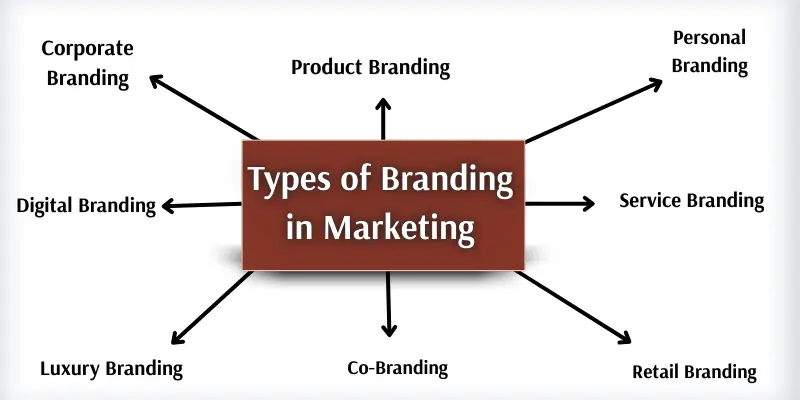
Different Types of branding in marketing
Branding is the heart of every successful business. Understanding the types of branding in marketing helps companies connect with their audience, build trust, and grow effectively. Here are the common types of branding.
- Product Branding
- Corporate Branding
- Personal Branding
- Service Branding
- Retail Branding
- Co-Branding
- Luxury Branding
- Social / Cause Branding
- Event Branding
- Digital Branding
- Social Media Branding
- Influencer Branding
- Content Branding
- SEO Branding
- Emotional Branding
1. Product Branding
Product branding gives a product a special name, logo, or design. It helps people recognize the product easily. It makes the product look different and trustworthy. Good product branding helps people remember the product. People choose it over other products.
Example: Oreo uses a blue pack and logo. People recognize it right away.
2. Corporate Branding
Corporate branding creates a strong image for the entire company. It shows what the company believes in. It helps people trust the business. It also gives a professional and consistent look in the market.
Example: Toyota is known for quality and reliability. People trust the company because of its branding.
3. Personal Branding
Personal branding helps a person show their skills, talent, and personality. It makes others remember and trust them. Strong personal branding opens opportunities and creates a loyal following.
Example:
Elon Musk is recognized worldwide for innovation and his personal brand image.
4. Service Branding
Service branding gives a unique identity to a company’s services. It shows quality and professionalism. Customers trust branded services more and choose them easily.
Example: Domino’s is known for fast pizza delivery, thanks to its strong service branding.
5. Retail Branding
Retail branding makes a store stand out and become recognizable. It creates a welcoming environment for shoppers and helps customers trust the store. Well-branded shops are easy to remember and enjoyable to visit.
Example: IKEA stores have organized layouts and unique designs that make shopping enjoyable.
6. Co-Branding
Co-branding happens when two brands work together to create a product or service. It combines their strengths and reaches more customers. Co-branding makes products attractive and trustworthy.
Example: GoPro and Red Bull collaborate for extreme sports events, creating excitement around both brands.
7. Luxury Branding
Luxury branding focuses on making products feel exclusive and high-class. It uses design, packaging, and reputation to create desire. Customers buy luxury brands for status and quality.
Example: Rolex watches are seen as premium and luxurious, attracting wealthy buyers.
8. Social / Cause Branding
Cause branding connects a brand with social causes or charity work. It shows the brand cares about society or the environment. It builds trust and loyalty among customers.
Example: Ben & Jerry’s promotes environmental causes while selling ice cream, making people support them.
9. Event Branding
Event branding gives events organized by companies an identity. It makes events memorable and helps connect them to the brand. Customers associate positive experiences with the brand.
Example: Red Bull organizes extreme sports events, making the brand memorable and exciting.
10. Digital Branding
Digital branding builds a brand’s identity on the internet. It includes websites, apps, emails, and digital ads. This type of branding helps a brand reach people fast and create a strong online image. It also makes it easy for customers to remember and trust the brand.
Example: Samsung uses digital branding through its website and online ads to stay recognizable.
11. Social Media Branding
Social media branding focuses on building a brand’s image on platforms like Facebook, Instagram, and TikTok. It helps brands talk directly with their audience and share updates quickly. This type of branding increases engagement and makes the brand easy to recognize in daily scrolling.
Example: KFC uses social media branding by posting funny content and promotions to engage followers.
12. Influencer Branding
Influencer branding uses well-known people to promote products. When influencers share a product, their followers feel more confident to try it. This type of branding helps companies reach new customers and build trust through real personalities.
Example:
Maybelline works with beauty influencers to show makeup looks and attract new buyers.
13. Content Branding
Content branding builds a brand through helpful, educational content. It includes blogs, videos, guides, and podcasts. This branding type builds trust with the audience because it provides value rather than just selling.
Example: Canva uses tutorials and design blogs to teach users and strengthen its brand identity.
14. SEO Branding
SEO branding improves a brand’s visibility on search engines. When a website ranks higher on Google, more people discover the brand naturally. This branding helps build trust because users often believe top search results are reliable.
Example: Healthline ranks high on Google for many health topics, which strengthens its brand reputation.
15. Emotional Branding
Emotional branding connects with people’s feelings. It uses stories, visuals, and messages that touch the heart. This type of branding builds a deep bond and makes customers loyal for a long time.
Example: Johnson’s Baby creates emotional ads that show love and care between parents and babies.
Conclusion
So, friends, we are almost done. In this post, we covered the Types of Branding in Marketing in detail. My personal recommendation is to start with one simple branding type and improve it step by step. Focus on making your message clear and consistent across the board. If you found this guide helpful, please explore my other articles to learn more about branding and marketing.
FAQs about types of Branding
There are many types of branding, such as product branding, corporate branding, personal branding, and digital branding. Each type has a different purpose. Businesses choose the type based on their goals and audience.
Beginners can start with product branding or personal branding because they are simple. These types help people understand who you are and what you offer. They also require less money and effort.
Digital branding means building your brand through online platforms such as websites, social media, and email. It helps you reach more people quickly. Today, most businesses use digital branding because customers spend a lot of time online.
Yes, a business can use multiple branding strategies at the same time. For example, a company can use product, digital, and service branding together. Using multiple types often gives stronger results.
No, branding is more than just a logo or color. It also includes your message, style, voice, and customer experience. Everything that represents your business becomes part of your brand.
Branding takes time and consistency. You need to share the same message, design, and quality again and again. With regular effort, people start trusting and recognizing your brand.

- Be Respectful
- Stay Relevant
- Stay Positive
- True Feedback
- Encourage Discussion
- Avoid Spamming
- No Fake News
- Don't Copy-Paste
- No Personal Attacks
- Be Respectful
- Stay Relevant
- Stay Positive
- True Feedback
- Encourage Discussion
- Avoid Spamming
- No Fake News
- Don't Copy-Paste
- No Personal Attacks
