Difference between inbound and outbound marketing
Published: 20 Nov 2025
Struggling to get your audience’s attention in today’s noisy market? The difference between inbound and outbound marketing could be the key. While outbound marketing often interrupts potential customers, inbound marketing builds trust by providing helpful content. Recognizing which strategy suits your business can save you time, money, and frustration.
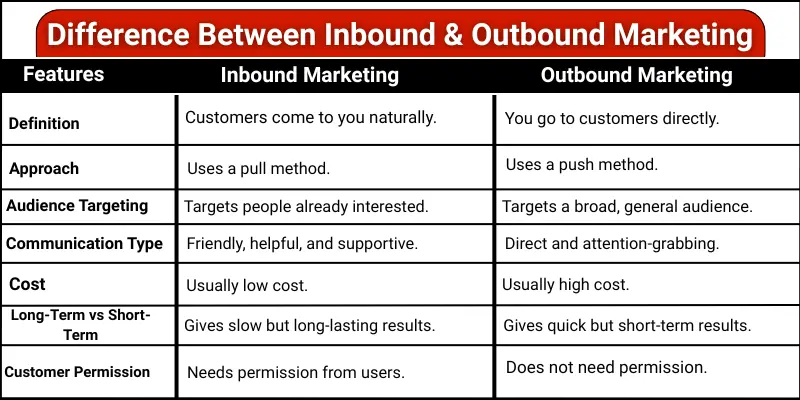
What is difference between inbound and outbound marketing?
The differences between inbound and outbound marketing help you see how businesses attract customers in different ways. One focuses on pulling people in, while the other pushes messages out. Here is the main difference between inbound vs outbound.
- Definition
- Approach
- Audience Targeting
- Communication Type
- Cost
- Long-Term vs Short-Term
- Customer Permission Level
- Message Control
- Analytics & Tracking
- Branding Style
1. Definition
Understanding the difference between inbound and outbound marketing starts with their basic meanings. Both methods try to reach customers, but they work in very different ways.
Inbound Marketing
Inbound marketing means people come to you. You attract them with helpful content. You give information that answers their questions. When they find your content useful, they visit you by choice.
Outbound Marketing
Outbound marketing means you go to people. You send your message to many customers at once. You try to get their attention directly. They do not ask for the message, but you still show it to them.
2. Approach
The marketing approach shows how a business tries to reach its customers. Inbound and outbound marketing use very different ways to connect with people.
Inbound Marketing:
Inbound marketing focuses on building trust first. It shares simple guides, helpful tips, and beginner-friendly information that makes people feel comfortable. Instead of running after people, it lets them come naturally when they need help
Outbound Marketing:
Outbound marketing follows a push method. Businesses actively show their message through different channels because they want quick attention. That’s why ads, promotional offers, and paid messages reach people even when they’re not looking for them
3. Audience Targeting
Audience targeting means how a business chooses people to show its message to. Inbound and outbound marketing target their audiences in different ways.
Inbound Marketing:
In inbound marketing, the audience chooses to connect because the content matches their needs. They usually search for solutions and naturally discover the business. So, the audience is already interested before interacting
Outbound Marketing:
For outbound marketing, the audience is broad and not always interested. Businesses don’t know who is looking for what. They simply show the message to as many people as possible. Only a small group responds.
4. Communication Type
How a business talks to its audience is very important. Inbound and outbound marketing use different ways to communicate.
Inbound Marketing:
Inbound marketing talks in a friendly way. Businesses answer questions, share tips, and provide help. People feel welcomed and supported. They can reach the business anytime.
Outbound Marketing
Outbound marketing uses a direct style. Businesses send short and clear messages because they want quick attention. People may not interact much because the communication is one-way. The business talks, and the audience simply receives the message.
5. Cost Difference
Marketing costs can be very different for businesses. Inbound and outbound marketing spend money in different ways.
Inbound Marketing:
Inbound marketing usually costs less. Businesses create blogs, videos, or posts online. They spend time making helpful content. People come naturally, so the cost stays low.
Outbound Marketing:
Outbound marketing needs a bigger budget because almost every method is paid. Whether it’s TV, radio, print, or online ads, businesses must spend money to show their message. That’s why outbound campaigns are often more costly than inbound methods
6. Long-Term vs Short-Term
Inbound and outbound marketing also differ in how long results last. Some methods give results slowly but stay for a long time. Others give quick results but may not last.
Inbound Marketing:
Inbound marketing works slowly. It builds a strong relationship with people over time. For example, helpful blog posts or social media tips attract people again and again. This gives long-lasting results.
Outbound Marketing:
Outbound marketing works fast. You show ads, call people, or send emails quickly. It brings fast results. But when the campaign ends, the results may stop immediately.
7. Customer Permission Level
Inbound and outbound marketing also differ in how they involve customers’ permission. Some methods need permission first, while others do not.
Inbound Marketing:
Inbound marketing asks for permission. People choose to see your content. For example, they may subscribe to your newsletter or follow your social media. This makes them feel safe and happy.
Outbound Marketing:
Outbound marketing does not need permission. You send ads, calls, or messages directly. Sometimes people find it annoying. It can reach many people fast but not all of them want it.
8. Message Control
Inbound and outbound marketing differ in how you control your messages. Some methods let you guide the message, while others are less flexible.
Inbound Marketing:
Inbound marketing gives you more control. You decide what content to show and when. For example, you can write blogs or post videos exactly how you want. People choose to read or watch it.
Outbound Marketing:
Outbound marketing gives less control over how people see the message. You send ads, emails, or calls to many people at once. You cannot control how each person reacts or if they pay attention.
9. Analytics & Tracking
Inbound and outbound marketing also differ in how you track results. Some methods give clear data, while others give limited information.
Inbound Marketing:
Inbound marketing gives detailed tracking. You can see who visits your website, reads your blogs, or watches your videos. It helps you know what works and improve your strategy.
Outbound Marketing:
Outbound marketing gives less detailed tracking. You can see some results, like how many people got your email or saw your ad. But you cannot know exactly how each person reacted.
10. Branding Style
Inbound and outbound marketing also differ in how they build a brand. Each method creates a different kind of impression.
Inbound Marketing:
Inbound marketing builds a strong and lasting brand. People remember you because of helpful content, tips, or stories you share. It makes your brand trusted and friendly over time.
Outbound Marketing:
Outbound marketing builds brand quickly but less personally. Ads, calls, and messages show your brand fast. People may notice it, but they may not feel connected or trust it deeply.
Conclusion
So, friends, we are almost done. In this post, we covered the difference between inbound and outbound marketing in detail. In my opinion, every business should focus on inbound marketing for long-term success while using outbound marketing wisely for quick results. Start applying these strategies today and watch your business grow faster! For more helpful posts, check out my digital marketing basics Guide.
Queries about inbound vs outbound marketing
Inbound marketing is a way to attract customers naturally. You create helpful content like blogs, videos, or social media posts. People come to you because they find your content useful.
Outbound marketing is when you send your message to people directly. This includes ads, calls, or emails. It helps reach new people quickly but may not last long.
Both are useful for different goals. Inbound marketing is better for long-term trust. Outbound marketing works well for short-term results.
Outbound marketing works fast. People see your ads or messages immediately. You can get leads or responses in a few days.
Small businesses usually start with inbound marketing. It is cheaper and builds strong customer relationships. Later, they can use outbound to reach more people fast.

- Be Respectful
- Stay Relevant
- Stay Positive
- True Feedback
- Encourage Discussion
- Avoid Spamming
- No Fake News
- Don't Copy-Paste
- No Personal Attacks
- Be Respectful
- Stay Relevant
- Stay Positive
- True Feedback
- Encourage Discussion
- Avoid Spamming
- No Fake News
- Don't Copy-Paste
- No Personal Attacks
