Industrial segmentation
Published: 24 Feb 2026
Do you wonder why some businesses grow fast, but others do not? The answer is industrial segmentation. Many businesses do not know how to divide their market. Industrial segmentation helps them focus on the right companies. It makes selling easier and increases profit.
In this guide, we will explain industrial segmentation in very simple words.
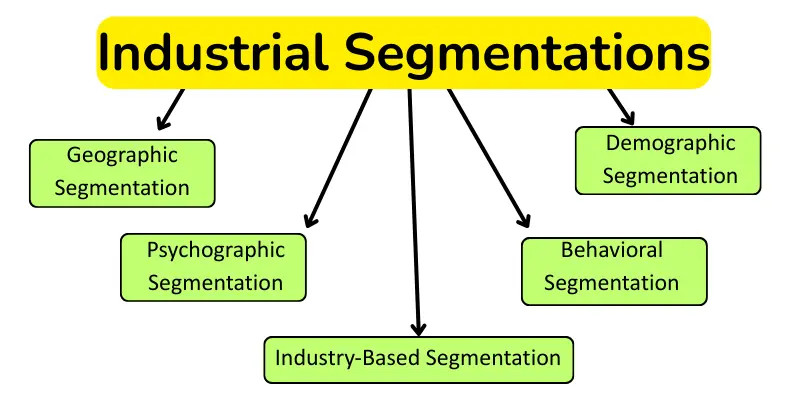
What is Industrial Segmentation?
Industrial segmentation is when a company divides the market of other businesses into smaller groups. Each group has companies with similar needs or characteristics. For example, some companies may be in the same industry, have the same size, or need similar products.
By doing this, a business can focus on the right companies instead of trying to sell to everyone. It helps them better understand their customers. They can create products that fit the needs of each group.
Industrial segmentation is very useful in B2B marketing, where businesses sell to other businesses rather than individual consumers. It helps save money, increase sales, and build strong relationships with the right customers.
Importance of Industrial Segmentation
Industrial segmentation helps businesses focus on the right companies. It makes marketing easier and more effective.
Key points:
- Helps find the right customers
- Saves money on marketing
- Improves sales and profits
- Saves time and resources
- Builds strong business relationships
Types of Industrial Segmentation
Businesses segment industrial markets in different ways to better understand their customers. Each type helps companies focus on specific groups of businesses.
Main Types:
- Geographic Segmentation
- Demographic Segmentation (Firmographics)
- Behavioral Segmentation
- Psychographic Segmentation
- Industry-based Segmentation
- Technology-based Segmentation
- Benefit-based Segmentation
- Purchasing Approach Segmentation
1. Geographic Segmentation
Companies divide businesses based on location. They look at countries, cities, or regions. They also check the climate or industrial zones.
This type helps companies sell products that fit local needs. It makes delivery and support easier.
Key points:
- Focus on region, country, or city
- Serve local business needs
- Adjust marketing for each location
Example:
Caterpillar sells heavy machines differently in developing countries and mature markets. They provide special support services depending on the region.
2. Demographic Segmentation (Firmographics)
Companies divide businesses by size, type, or revenue. They also check the number of employees. They look at the industry type. This helps them choose the right companies to sell products.
Key points:
- Focus on company size (small, medium, large)
- Check the revenue of the company
- Count the number of employees
- Look at the business industry
Example:
Salesforce gives small businesses simpler CRM tools. Enterprise-level companies get advanced features. Each company gets what suits its size and needs.
3. Behavioral Segmentation
Companies divide businesses by buying patterns and usage. They check how often a company buys and which products it prefers.
Key points:
- Focus on buying behavior
- Check product usage and frequency
- Look at customer loyalty
- Understand product preferences
Example:
Grainger sells frequently to automated, high-volume buyers. They do not target low-volume or occasional buyers. They give discounts to regular customers
4. Psychographic Segmentation
Companies divide businesses by values, goals, and culture. They also check risk-taking habits.
Key points:
- Focus on company values and culture
- Look at business goals
- Check risk-taking behavior
- Understand decision-making style
Example:
Adobe sells creative design tools to businesses that value innovation. They do not sell the same tools to businesses that prefer traditional methods.
5. Industry-Based Segmentation
Companies divide businesses by industry type. They check if a company is in manufacturing, IT, healthcare, or another sector.
Key points:
- Focus on industry type
- Serve each industry with the products it needs
- Understand industry requirements
- Target the right sector
Example:
IBM offers IT solutions tailored for the finance, healthcare, and education industries. Each sector gets services that fit its needs.
6. Technology-Based Segmentation
Companies divide businesses by the technology they use. They check the software, tools, or machines a company has.
Key points:
- Give products that match their tools
- Understand technology needs
- Target businesses with the right tech
Example:
Microsoft Azure gives advanced cloud AI tools to tech-mature companies. Less tech-savvy firms get basic migration services. Each company gets products suited to its technology.
7. Benefit-Based Segmentation
Companies divide businesses by the benefits they want from a product. They check what problems a company wants to solve.
Key points:
- Focus on the benefits a business wants
- Solve specific problems
- Offer products that meet their needs
- Understand what each business values
Example:
A cleaning equipment supplier sells time-saving machines to busy factories. Small offices get smaller machines. Each business gets the solution it needs.
8. Purchasing Approach Segmentation
Companies divide businesses by how they buy products. They check how often they buy and how decisions are made.
Key points:
- Focus on the buying approach
- Check the decision-making process
- Look at purchase frequency
- Understand purchasing habits
Example:
Grainger segments customers by buying habits. High-volume buyers get large orders, occasional buyers get small orders. Each business gets the service it needs.
Process of Industrial Segmentation (Step-by-Step)
Industrial segmentation helps companies divide the market into smaller groups, making selling easier and more effective.
Step-by-Step Process:
- Identify the Market: Look at all businesses that might need your product.
- Choose Segmentation Criteria: Decide how to divide businesses (size, industry, location, behavior, or technology).
- Collect Data: Gather information about each business’s needs and buying habits.
- Analyze Segments: Group businesses with similar needs together.
- Select Target Segment: Pick the segments most likely to buy your products.
- Develop Strategy: Make marketing and sales plans for each segment.
Advantages and Disadvantages of Industrial Segmentation
Industrial segmentation helps companies better understand their customers. It allows them to target the right businesses with the right products. But like everything, it has both advantages and disadvantages.
| Advantages |
|---|
|
| Disadvantages: |
|---|
|
Industrial Segmentation in B2B Marketing
Industrial segmentation is very important in B2B marketing. It helps companies sell products to other businesses instead of individual customers. By dividing businesses into smaller groups, companies can focus on the right customers and make marketing more effective.
Role in B2B Strategy:
- Identifies high-value business customers
- Focuses marketing on companies most likely to buy
- Makes sales and marketing more efficient
Account-Based Marketing (ABM):
- Targets specific companies with personalized campaigns
- Treats each business as a separate “account.”
- Tailors marketing messages to each business’s needs
Long Sales Cycles:
- B2B deals often take weeks or months to complete
- Segmentation helps focus on businesses ready to buy
- Reduces wasted time and increases the success rate
Conclusion
So, friends, we are almost done. In this post, we covered Industrial Segmentation and how it helps businesses target the right customers. I personally recommend using segmentation in every B2B strategy because it saves time and increases sales. Start dividing your market today and see how it improves your business results!
FAQs about Industrial Segmentation
It helps companies sell products to other businesses, not individual customers. Businesses can create marketing messages for specific segments. This makes campaigns more effective and increases sales.
Yes! Even small businesses can segment their customers. It helps them focus on high-value clients and improve sales.
ABM is a marketing approach that uses segmentation to target specific companies. Each business is treated as a separate account. Companies create personalized campaigns for these accounts.
Yes! By targeting only the right businesses, companies spend less on marketing. They also avoid wasting time on low-potential clients. This increases efficiency and profit.

- Be Respectful
- Stay Relevant
- Stay Positive
- True Feedback
- Encourage Discussion
- Avoid Spamming
- No Fake News
- Don't Copy-Paste
- No Personal Attacks
- Be Respectful
- Stay Relevant
- Stay Positive
- True Feedback
- Encourage Discussion
- Avoid Spamming
- No Fake News
- Don't Copy-Paste
- No Personal Attacks
