Why on-page SEO is important
Published: 23 Dec 2025
Hello friends! Have you ever wondered why some websites always appear first on Google? The answer is on-page SEO. A well-optimized website looks professional, loads fast, and is easy to navigate. I am here to guide you and explain why on-page SEO is important. Once you understand it, you can make your website more visible, popular, and trusted by visitors.
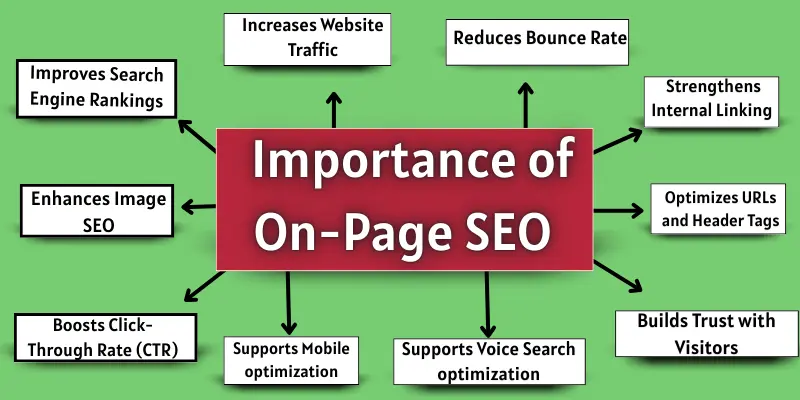
Top 12 Reasons Why On-Page SEO is Important
On-page SEO is the key to making your website visible and user-friendly. By following simple steps, you can attract more visitors and provide a better experience. Let’s explore the top 12 reasons why on-page SEO is important.
- Improves search engine rankings
- Increases website traffic
- Enhances user experience & reduces bounce rate
- Boosts click-through rate (CTR)
- Optimise content for target keywords & meta titles/descriptions
- Optimise URLs and header Tags
- Enhances Image SEO
- Supports mobile optimization & speeds up website loading time
- Strengthens internal linking structure
- Helps achieve higher conversions
- Supports voice search optimization
- Builds trust and credibility with visitors
1. Improves Search Engine Rankings
On-page SEO helps search engines understand your content. A clear and structured pages rank higher in search results. A higher ranking means more people can find your website. Proper on-page SEO ensures your site reaches the right audience.
2. Increases Website Traffic
Higher ranking brings more visitors naturally. On-page SEO makes your content easy to find. Optimized pages attract the right audience who are interested in your content.
3. Enhances User Experience & Reduces Bounce Rate
On-page SEO makes your website easy to navigate. Clear headings, fast-loading pages, and a simple design help visitors find what they need. When users enjoy your site, they stay longer and explore more.
4. Boosts Click-Through Rate (CTR)
On-page SEO helps your website appear attractive in search results. Clear titles and meta descriptions make users curious to click. A higher CTR signals search engines that your content is useful.
5. Optimizes Content for Target Keywords & Meta Titles/Descriptions
Using the right keywords tells search engines what your page is about. Clear and attractive meta titles and descriptions encourage more clicks. Optimized content helps your site rank better and reach the right audience.
6. Optimizes URLs and Header Tags
Simple and clear URLs make it easy for users and search engines to understand your page. Proper headers (H1, H2, H3) organize content. Well-structured headers make your page easy to read and scan.
7. Enhances Image SEO
Optimizing images with proper alt text, file names, and sizes makes them easy to find. Optimized images also improve page speed and user experience. Search engines understand your content better with good image SEO.
8. Supports Mobile optimization & Speeds Up Website Loading Time
Mobile-friendly websites are easier to navigate on phones and tablets. Fast-loading pages keep visitors happy and reduce frustration. Both factors improve user experience and search engine ranking.
9. Strengthens Internal Linking Structure
Internal links guide visitors to other helpful content on your website. They also help search engines better understand your website. Strong linking improves navigation and page authority.
10. Helps Achieve Higher Conversions
Clear content, good layout, and optimized pages make it easy for visitors to take action. Users can easily buy, sign up, or contact you. Optimized pages also build trust and confidence.
11. Supports Voice Search Optimization
Using clear, simple language helps your website appear in voice search results. Devices like Alexa and Siri can easily read your content. Voice search brings new visitors who speak their queries.
12. Builds Trust and Credibility with Visitors
A professional, reliable website builds user confidence. Clear content, fast pages, and easy navigation make visitors trust your site. Trusted websites encourage repeat visits and signal reliability to search engines.
Conclusion
Okay, friends, let’s finish this! In this guide, we have covered in detail why on-page SEO is important. From my experience, focusing on on-page SEO is one of the best decisions you can make for your website. Small changes like better content, clearer headings, and faster pages can yield big results over time. My recommendation is to start simple and improve one page at a time.
FAQS about the importance of on page seo
Yes, on-page SEO directly affects rankings. Search engines prefer clear and well-optimized pages. Good on-page SEO increases your chances of appearing higher in results.
On-page SEO does not work overnight. Results usually appear within a few weeks to a few months. Consistency brings better long-term results.
Content quality, keywords, titles, and headings are very important. Page speed and mobile friendliness also matter. Internal links help search engines better understand your site.
Yes, anyone can do on-page SEO. You do not need advanced technical skills. Simple steps can make a big difference.
On-page SEO is very important but not the only factor. Off-page SEO and backlinks also help. Still, on-page SEO is the first step.
You should review on-page SEO regularly. Update content when needed and fix issues. Regular updates help maintain good rankings.

- Be Respectful
- Stay Relevant
- Stay Positive
- True Feedback
- Encourage Discussion
- Avoid Spamming
- No Fake News
- Don't Copy-Paste
- No Personal Attacks
- Be Respectful
- Stay Relevant
- Stay Positive
- True Feedback
- Encourage Discussion
- Avoid Spamming
- No Fake News
- Don't Copy-Paste
- No Personal Attacks
