Differences Between SEO and SEM – A Simple Guide
Published: 26 Aug 2025
Did you know that over 93% of online experiences begin with a search engine, and businesses that appear on the first page get over 75% of the clicks? That’s why understanding the difference between SEO and SEM is so important. These two strategies play a key role in how your website gets traffic, whether organically or through paid ads.
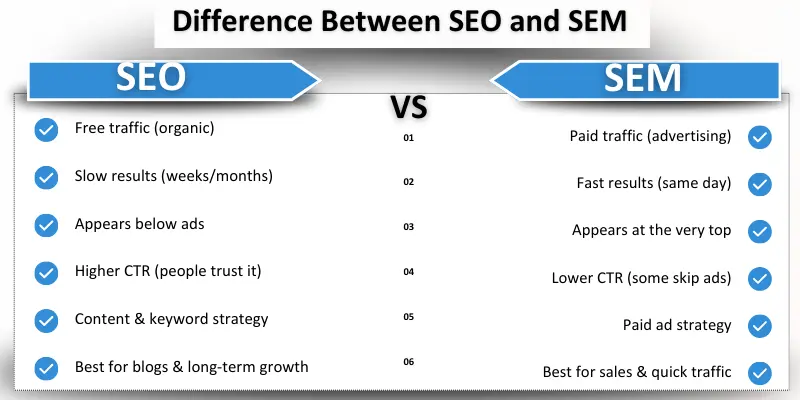
Differences Between SEO and SEM
The differences between SEO and SEM are an important topic for anyone who wants to grow their website or online business. Both are used to get traffic from search engines, but they work in different ways.
- Meaning
- Traffic Type
- Cost
- Time to See Results
- Position on Google
- Click-Through Rate (CTR)
- Long-Term Benefit
- Strategy Type
- Control Over Results
- Use Case
Meaning
SEO and SEM help websites appear in Google search results. But they work in different ways.
SEO
SEO means Search Engine Optimization. It helps websites appear in search results without paying money. People use SEO to get free traffic from Google. It works by using good content, keywords, and other tricks to rank higher..
SEM
SEM means Search Engine Marketing. It helps websites get traffic by paying for ads. These ads show on top of the search results. Businesses use SEM when they want quick traffic and fast results.
Traffic Type
SEO and SEM help bring people to your website. But the kind of traffic they bring is not the same.
SEO
SEO gives you natural traffic. People search on Google and find your website without any ads. They click your link because it matches their search. This traffic is called organic.
SEM
SEM gives you advertised traffic. You run ads on Google to get visitors. People click the ad and are directed to your website. It is called paid traffic.
Cost
The cost of using SEO and SEM differs. One can be free, and the other always needs money.
SEO
SEO does not charge you for clicks. You don’t pay Google. But you might spend money on tools, writers, or website help. It’s a smart option if you want low-cost traffic over time.
SEM
SEM always needs a budget. You pay Google for every single click. More clicks mean more cost. When your budget ends, your ad stops too.
Time to See Results
SEO and SEM work at different speeds. One is slow and steady. The other is fast and quick.
SEO
SEO takes more time to show results. Your website may take several weeks or months to appear in Google search results. You need patience. However, once it ranks, it stays in place longer.
SEM
SEM shows results quickly. Your ad appears as soon as you start the campaign. People can visit your site the same day. It is perfect for fast traffic.
Position on Google
SEO and SEM both help your website appear in search results. But they show your site in different places.
SEO
SEO shows your website below the ads. It may take time to reach the top of the page. But it stays longer once it gets there.
SEM
SEM shows your ad at the very top of the search page. It appears above all other results. But it disappears when you stop paying.
Click-Through Rate (CTR)
CTR means how many people click your link after seeing it. SEO and SEM both get clicks, but in different ways.
SEO
SEO often gets more clicks over time. People trust normal search results. They feel the website is more helpful and real.
SEM
SEM may get fewer clicks. Some users skip ads. They know it’s a paid result, so they scroll down to find real pages.
Long-Term Benefit
SEO and SEM give different types of results over time. One is good for the future. The other works for short time only.
SEO
SEO is better for long-term growth. Once your website ranks, it can stay there for many weeks or months. You keep getting traffic without doing much again.
SEM
SEM is good for short-term goals. You get visitors fast, but only while your ads run. When you stop the ad, the traffic also stops.
Strategy Type
SEO and SEM follow different plans. Both need smart work, but their methods are not the same.
SEO
SEO uses a content-based strategy. You write helpful articles, use the right keywords, and build strong links. It needs good planning and regular updates.
SEM
SEM uses a paid ad strategy. You create ads, choose your audience, and set a budget. You control who sees your ad and when.
Control Over Results
SEO and SEM give you different levels of control. One is flexible, the other depends on rules.
SEO
SEO gives you less control. You follow Google’s rules and wait for results. Even small changes in search rules can affect your ranking.
SEM
SEM gives you more control. You decide your ad budget, target audience, and timing. You can start, stop, or change your ads anytime.
Use Case
SEO and SEM are useful in different situations. You can choose one based on your goal.
SEO
SEO is best for long-term websites. It works well for blogs, learning sites, and small businesses. If you want steady traffic over time, choose SEO.
SEM
SEM is great for quick results. It helps in product launches, sales, or events. If you need fast traffic now, SEM is a good choice.
Conclusion
So, friends, it’s time to wrap up! We have discussed the difference between SEO and SEM in easy words. Both are helpful, but I personally suggest starting with SEO if you want free traffic and long-term results. Later, you can try SEM when you need fast results. Keep learning, keep growing. Now go ahead and choose the best one for your website goals!
FAQS about SEO VS SEM
Here are Common Questions about difference between SEO and SEM
SEO brings free traffic by ranking your website in search results. SEM brings paid traffic through ads. Both help people find your site, but in different ways
It depends on your goals. SEO is better for long-term results and saving money. SEM is better for quick traffic and fast promotion
SEO is mostly free, but it requires time and effort. SEM needs money for every click or ad view. So SEO is cheaper in the long run.
SEO can take anywhere from a few weeks to several months to show results. It grows slowly but gives lasting traffic. You need to be patient and consistent.
Some SEO tools are free, and some are paid. You can start with free tools like Google Search Console. Later, you can use paid tools for better features.
Yes, many people click on ads when they see something useful. But some people skip ads and go to the regular search results. That’s why CTR (Click-Through Rate) is different in SEO and SEM.

- Be Respectful
- Stay Relevant
- Stay Positive
- True Feedback
- Encourage Discussion
- Avoid Spamming
- No Fake News
- Don't Copy-Paste
- No Personal Attacks
- Be Respectful
- Stay Relevant
- Stay Positive
- True Feedback
- Encourage Discussion
- Avoid Spamming
- No Fake News
- Don't Copy-Paste
- No Personal Attacks
