Advantages Disadvantages of Email Marketing
Published: 11 Jan 2026
Emails are part of our daily life. We use them for school, work, and keeping in touch with friends. Businesses also use emails to share news, promotions, and special offers.
But email marketing is not always easy. In this article, we will cover the advantages and disadvantages of email marketing, helping you understand why it works and where it might create challenges.
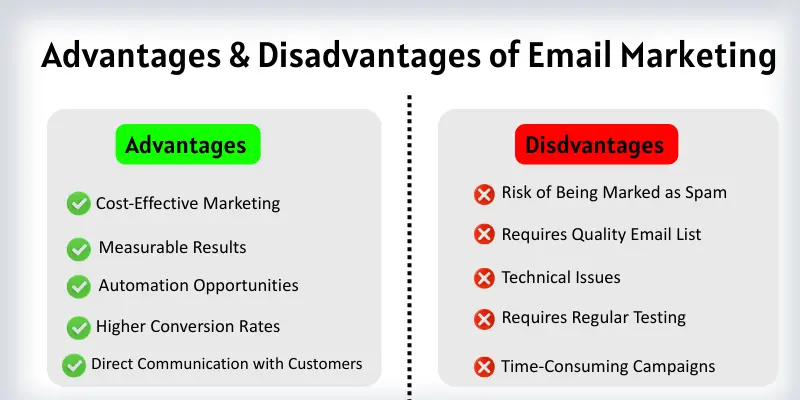
What are the advantages of email marketing
Email marketing helps businesses reach their customers directly through emails. It is fast, cost-effective, and can build strong connections with people. Many companies use it because it helps them grow their business and increase sales easily.
10 Advantages of Email Marketing
Email marketing has many benefits for businesses of all sizes. Here are the top 10 advantages:
- Cost-Effective Marketing
- Direct Communication with Customers
- Measurable Results
- Builds Brand Awareness
- Easy to Personalize Messages
- Automation Opportunities
- Builds Strong Customer Relationships
- Higher Conversion Rates
- Large Audience Reach
- Supports Targeted Marketing
1. Cost-Effective Marketing
Email marketing is a low-cost way to promote a business. Companies do not need to spend a lot of money on printing or ads. They can send emails to many people at the same time. This helps businesses save money and still reach their customers easily.
2. Direct Communication with Customers
When you use email marketing, you talk to your customers directly. Your message goes straight into their inbox. No platform controls your reach. This helps you share updates, offers, and news in a clear and personal way.
3. Measurable Results
With email marketing, you can clearly see what is working. You can check how many people open your emails. You can also see who clicks on your links. This helps you improve your emails and get better results next time.
4. Builds Brand Awareness
When you send emails regularly, people start recognizing your brand. Your name, logo, and message stay in their mind. This helps build trust over time. Customers are more likely to remember you when they need your product or service.
5. Easy to Personalize Messages
You can make each email special for your customers. Use their name or show offers they like. This makes them feel important and valued. Personalized emails get more attention and clicks.
6. Automation Opportunities
You can set up emails to send automatically at the right time. This saves a lot of effort and time. Emails can go out on birthdays, special offers, or reminders without you doing anything. Automation keeps your customers engaged regularly.
7. Builds Strong Customer Relationships
When you send useful and friendly emails, customers feel connected to your brand. They trust you more over time. Regular updates and helpful tips make them loyal. Strong relationships bring repeat business and happy customers.
8 Higher Conversion Rates
When you send the right emails, more people take action. They buy products, sign up, or click links. Emails often bring better results than social media posts. This helps your business grow faster.
9. Large Audience Reach
With email marketing, you can reach many people at once. Hundreds or even thousands of customers can get your message in minutes. This helps your business connect with more people easily.
10. Supports Targeted Marketing
You can send emails to the right people at the right time. This means customers see offers that interest them. Targeted emails get more attention and better results.
What are the Disadvantages of Email Marketing?
Email marketing can also have some problems. Sometimes emails go to spam or people ignore them. Creating good emails can take time, and businesses must follow rules to avoid legal issues.
10 Disadvantages of Email Marketing
Here are the main disadvantages:
- Risk of Being Marked as Spam
- Requires Quality Email List
- Time-Consuming Campaigns
- Hard to Stand Out in the Inbox
- Technical Issues
- Legal Compliance Required
- Overuse Can Annoy Customers
- Poor Content Reduces Engagement
- Requires Regular Testing
- Not Effective Without Strategy
1. Risk of Being Marked as Spam
Sometimes, emails go to the spam folder instead of the inbox. Customers may never see them. This can reduce the effectiveness of your campaign. You need to follow the rules to avoid spam issues.
2. Requires Quality Email List
Your emails only work if your list is good. Wrong or fake emails will not help. A strong list of real customers is important. It ensures your messages reach the right people.
3. Time-Consuming Campaigns
Creating emails takes time and effort. Writing, designing, and adding links can be time-consuming. You must plan each campaign carefully. Good emails need patience and practice.
4. Hard to Stand Out inthe Inbox
Many businesses send emails every day. Your message can get lost in the crowd. You need catchy subject lines and interesting content. This helps your emails get noticed.
5. Technical Issues
Emails may not show correctly on all devices. Some people use phones, tablets, or computers. If emails look broken, customers may ignore them. Testing is important to avoid technical problems.
6. Legal Compliance Required
Businesses must follow rules when sending emails. Laws like GDPR or CAN-SPAM protect customers. Breaking these rules can cause fines or trouble. Always get permission before sending emails.
7. Overuse Can Annoy Customers
Sending too many emails can bother people. They may unsubscribe or ignore your messages. It is important to send emails only when needed. Balance is key to keep customers happy.
8. Poor Content Reduces Engagement
If emails are boring or confusing, people will not read them. Good content is simple, clear, and helpful. Interesting emails keep customers engaged and paying attention.
9. Requires Regular Testing
You need to test your emails often. Check subject lines, links, and design. Testing helps find what works best. It improves your results over time.
10. Not Effective Without Strategy
Email marketing works only if you plan carefully. Random emails may not get results. A clear strategy helps you reach the right people and achieve your goals.
Conclusion
So, friends, we are almost done. In this post, we covered the advantages and disadvantages of email marketing. I personally recommend using email marketing because it is simple, cost-effective, and helps you connect with your customers directly. Start planning your email campaigns today and see how they can grow your business!
FAQs about the pros and cons of email marketing
Email marketing is cheap and effective. It helps reach many people quickly. It also builds trust and loyalty with customers.
It depends on your business and audience. Usually, 1–2 emails per week is enough. Too many emails can annoy customers.
Yes! You can send emails to hundreds or thousands of people at once. This helps your business grow faster.
If emails go to spam, customers may not see them. This reduces the chance of getting clicks or sales. Always follow email rules and get permission first.
Yes, using email marketing software helps a lot. Tools help create, send, and track emails easily. They also allow automation for better results.
Absolutely! Email marketing is cheap and works well for small businesses. It helps them reach customers without spending too much.
Both are useful, but emails are more personal. They often get higher clicks and sales. Social media is good for awareness, but emails build stronger connections.

- Be Respectful
- Stay Relevant
- Stay Positive
- True Feedback
- Encourage Discussion
- Avoid Spamming
- No Fake News
- Don't Copy-Paste
- No Personal Attacks
- Be Respectful
- Stay Relevant
- Stay Positive
- True Feedback
- Encourage Discussion
- Avoid Spamming
- No Fake News
- Don't Copy-Paste
- No Personal Attacks
