How Many Types of Keywords in SEO
Published: 05 Feb 2026
If you want your website to rank on Google, you need to understand keywords. Keywords are the heart of SEO. They help users find your content and connect with your website.
Many beginners ask: “How many types of keywords are there in SEO?” The answer is not just one. There are several types. Each type has a purpose. Each type works differently to improve your SEO strategy.
As an SEO expert, your goal is to guide your users. You must choose the right keyword type. You must match the keyword with what your users are looking for. This makes your content useful and helps your website rank better.
In this guide, you will learn about all types of keywords in SEO. I will explain why they matter, how to use them, and how to choose the best keywords for your content. Everything will be simple and easy to understand, even if you are a beginner. For more tips, you can also read our detailed guide on how to write SEO-friendly articles.
How Many Types of Keywords in SEO?
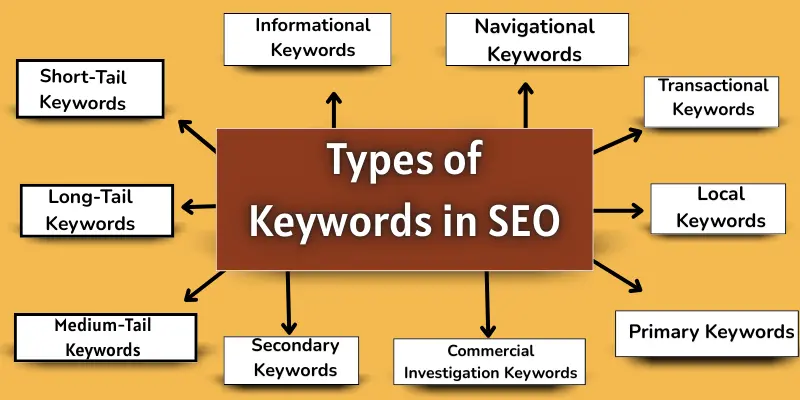
There are many types of keywords, and they are the backbone of SEO. Understanding different keyword types helps you rank better and reach the right audience. Below are the main types of keywords in SEO.
- Short-Tail Keywords
- Long-Tail Keywords
- Medium-Tail Keywords
- Informational Keywords
- Navigational Keywords
- Transactional Keywords
- Commercial Investigation Keywords
- Local Keywords
- Global Keywords
- Niche Keywords
- High-Search Volume Keywords
- Low-Search Volume Keywords
- Zero-Search Volume Keywords
- Branded Keywords
- Primary Keywords
- Secondary Keywords
- Supporting / LSI Keywords
- Question-Based Keywords
- Voice Search Keywords
- Seasonal Keywords
- Pain Point Keywords
1. Short-Tail Keywords
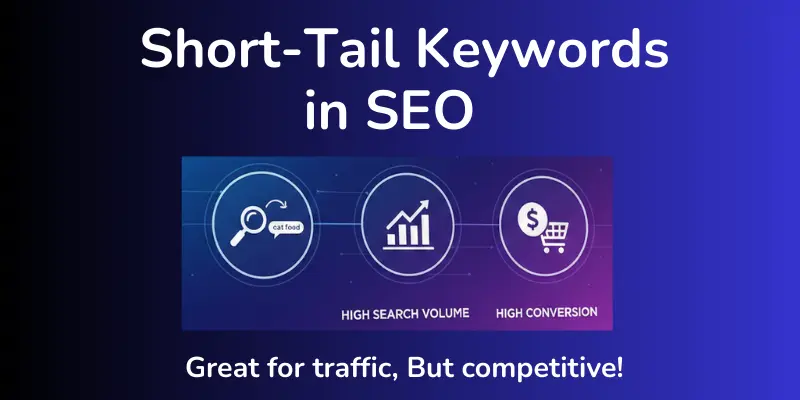
Short-tail keywords are simple and very common. They usually have one or two words. People use them when they search quickly and generally.
For example, if someone wants to buy shoes, they might just type “shoes” or “running shoes” in Google. These keywords get a lot of searches, but they are very competitive, so it can be hard for beginners to rank.
Key Points About Short-Tail Keywords:
- Usually 1–2 words long
- High search volume
- Very competitive
- Easy to rank for big sites, hard for new websites
- Great for traffic, not always for conversions
- Can be combined with long-tail keywords for better results
2. Long-Tail Keywords
Long-tail keywords are longer phrases, usually three or more words. People use them when they are looking for something specific. These keywords have less competition and are easier for new websites to rank.
For example, instead of just searching “shoes”, a person might type “best running shoes for women”. This is a long-tail keyword. It shows clear intent, so visitors who search this are more likely to take action.
Key Points About Long-Tail Keywords:
- Usually 3 or more words long
- Lower search volume than short-tail
- Less competitive, easier to rank
- Higher chance of conversions
- Targets specific audience needs
- Great to combine with short-tail keywords
3. Medium-Tail Keywords
Medium-tail keywords are between short-tail and long-tail keywords. They usually have 2 to 3 words. These keywords are less competitive than short-tail. They still get a good amount of traffic.
For example, instead of just “shoes” (short-tail) or “best running shoes for women” (long-tail), a medium-tail keyword could be “running shoes women”. It is specific enough to attract interested visitors. It also has decent search volume.
Key Points About Medium-Tail Keywords:
- Usually 2–3 words long
- Moderate search volume
- Less competitive than short-tail
- Easier for beginners to rank
- Targets users with some intent
- Good balance of traffic and conversions
4. Informational Keywords
Informational keywords are used by people who want to learn something. They usually search for answers, tips, or guides. These keywords are not meant to buy anything.
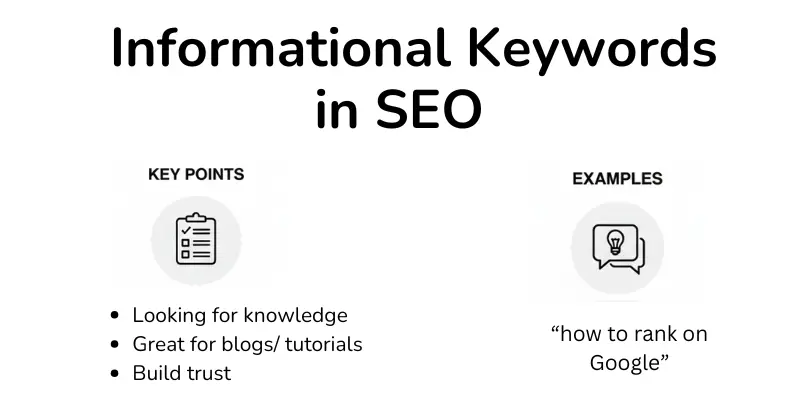
For example, someone might type “how to rank on Google” or “what is SEO”. The user is looking for information, not a product. Informational keywords are great for blogs, tutorials, and guides.
Key Points About Informational Keywords:
- People are looking for knowledge
- Not intended for buying
- Great for blog posts and tutorials
- Helps attract beginners and learners
- Can build trust and authority
- Usually combined with long-tail keywords
5. Navigational Keywords
Navigational keywords are used when people want to go to a specific website or page. They already know the brand or website name.
For example, someone may type “Facebook login” or “YouTube”. They are not looking for general information. They just want to reach a specific site quickly.
Key Points About Navigational Keywords:
- Used to find a specific website
- Users know the brand or site
- High intent to navigate, not buy
- Good for branded content
- Helps increase direct traffic
- Often short phrases
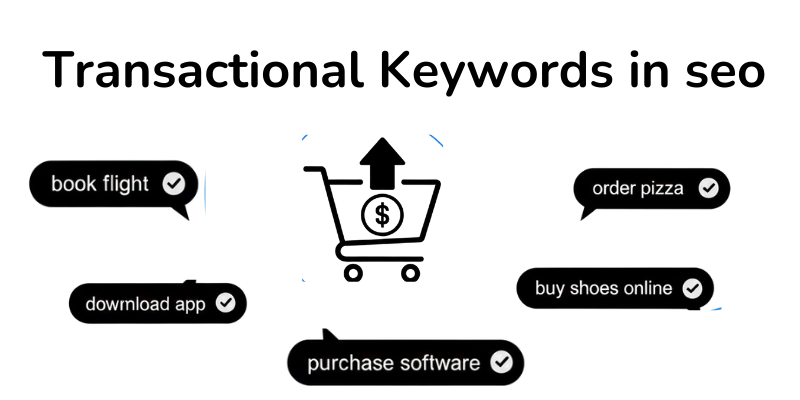
6. Transactional Keywords
Transactional keywords are used when people want to buy something or take action. These users are ready to make a purchase or complete a transaction.
For example, someone may type “buy iPhone 17 online” or “best running shoes to buy”. These keywords show strong buying intent.
Key Points About Transactional Keywords:
- Users want to take action or buy
- High conversion potential
- Usually include words like “buy,” “order,” or “discount”
- Great for product pages or e-commerce sites
- Helps increase sales
- Often combined with long-tail keywords
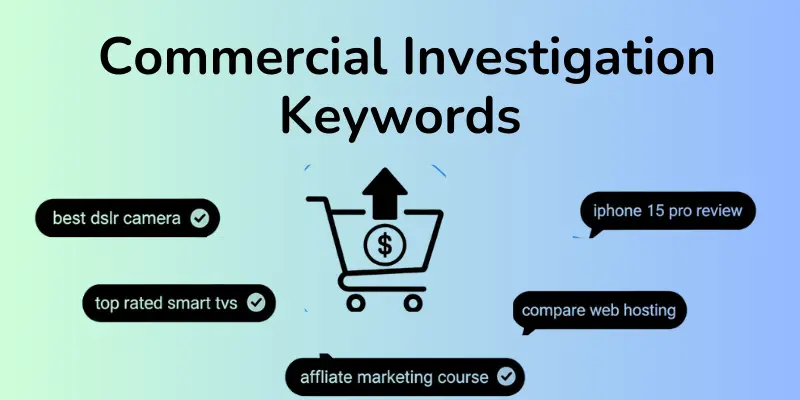
7. Commercial Investigation Keywords
Commercial investigation keywords are used when people want to compare products or services. They are not ready to buy yet. They are researching before making a decision.
For example, someone might type “best laptops for students 2026” or “Nike vs Adidas running shoes”. These searches show the user is thinking about buying, but needs more information first.
Key Points About Commercial Investigation Keywords:
- Users are researching before purchase
- Shows interest in buying
- Great for comparison articles or reviews
- Helps build trust and authority
- Often combined with long-tail keywords
- Targets users close to the buying stage
8. Local Keywords
Local keywords are used to target users in a specific location. They help businesses attract customers nearby.
For example, someone may type “best pizza in Karachi” or “SEO services in Lahore”. These searches show the user wants local results.
Key Points About Local Keywords:
- Target specific cities, towns, or regions
- Great for local businesses
- Helps attract nearby customers
- Usually includes location names
- Can improve foot traffic and local leads
- Works well with maps and Google My Business
9. Global Keywords
Global keywords are used to target users worldwide. They are not limited to any specific location.
For example, someone may search “best laptops 2026” or “top SEO tools”. These keywords aim to attract a global audience.
Key Points About Global Keywords:
- Target users worldwide
- Not location-specific
- Usually high search volume
- Great for international businesses or blogs
- Helps expand website reach
- Can attract diverse audiences
10. Niche Keywords
Niche keywords are very specific to a particular topic or audience. They target users with clear interests or needs.
For example, someone may type “vegan protein powder for athletes”. This keyword focuses on a specific group of users. Niche keywords are great for specialized websites or blogs.
Key Points About Niche Keywords:
- Very specific and targeted
- Attracts a focused audience
- Usually long-tail keywords
- Easier for beginners to rank
- Great for authority in a particular niche
- Can generate higher conversions
11. High-Search Volume Keywords
High-search volume keywords are searched by many users. They can bring a lot of traffic to your website.
For example, “iPhone” and “Netflix” are high-search-volume keywords. They are very popular, but also highly competitive.
Key Points About High-Search Volume Keywords:
- Searched by many users
- Can drive massive traffic
- Usually short-tail keywords
- Highly competitive
- Hard for beginners to rank
- Best for authority or established sites
12. Low-Search Volume Keywords
Low-search volume keywords are searched by fewer people. They get less traffic but are easier to rank.
For example, “best waterproof running shoes for women 2026” is a low-search volume keyword. It is very specific and attracts targeted visitors.
Key Points About Low-Search Volume Keywords:
- Searched by fewer users
- Easier for beginners to rank
- Usually long-tail keywords
- Attracts highly targeted audience
- Good for niche content
- Helps build authority over time
13. Zero-Search Volume Keywords
Zero-search volume keywords are rarely searched on Google. Sometimes they are new phrases or very specific questions.
For example, “best AI tool for Urdu bloggers 2026” might have zero search volume. Even though few people search, these keywords can attract the right audience.
Key Points About Zero-Search Volume Keywords:
- Rarely searched on Google
- Usually very specific or new
- Great for targeting niche audiences
- Can attract highly interested visitors
- Helps create unique content
- Good for authority and topical relevance
14. Branded Keywords
Branded keywords include the name of a brand or company. Users type these when they are looking for a specific brand.
For example, “Nike shoes” or “Apple iPhone 15” are branded keywords. People already know the brand and want specific results.
Key Points About Branded Keywords:
- Include brand or company name
- Users already know the brand
- High intent for navigation or purchase
- Good for brand visibility and recognition
- Often short-tail phrases
- Helps attract loyal or returning customers
15. Primary Keywords
Primary keywords are the main focus keywords for your page or content. They define what your page is mainly about.
For example, if your article is about “types of SEO keywords”, then that phrase is your primary keyword. Using it correctly helps Google understand your content.
Key Points About Primary Keywords:
- Main focus of your content
- Defines the topic of the page
- Should appear in title, headings, and first paragraph
- Helps search engines understand your page
- Usually, one strong, clear keyword
- Critical for on-page SEO
16. Secondary Keywords
Secondary keywords support your primary keyword. They add extra context to your content.
For example, if your primary keyword is “types of SEO keywords”, secondary keywords could be “long-tail keywords,” “short-tail keywords,” or “search intent”. They help Google understand your content better.
Key Points About Secondary Keywords:
- Support the main keyword
- Add context and relevance
- Can appear in subheadings or paragraphs
- Help improve SEO without overstuffing
- Usually related phrases or synonyms
- Increase chances of ranking for multiple terms
17. Supporting / LSI Keywords
Supporting or LSI (Latent Semantic Indexing) keywords are related words or phrases to your main keyword. They help Google understand your content better.
For example, if your main keyword is “SEO keywords”, LSI keywords could be “keyword research,” “search engine optimization,” or “SEO strategy”. Using them makes your content more relevant and natural.
Key Points About Supporting / LSI Keywords:
- Related to the main keyword
- Help Google understand the topic
- Improve content relevance
- Reduce keyword stuffing
- Can appear naturally in sentences
- Boost overall SEO performance
18. Question-Based Keywords
Question-based keywords are used when people ask questions on search engines. They usually start with who, what, where, when, why, or how.
For example, someone may type “What are SEO keywords?” or “How to do keyword research?”. These keywords show that users are looking for answers or guidance.
Key Points About Question-Based Keywords:
- Often start with question words
- Target users seeking answers
- Great for blogs, tutorials, and FAQs
- Helps increase engagement and dwell time
- Can be used for featured snippets
- Makes content more helpful and user-friendly
19. Voice Search Keywords
Voice search keywords are used when people speak their queries instead of typing. These searches are usually longer and conversational.
For example, someone might say “Hey Google, what is the best SEO tool for beginners?”. These keywords show natural language intent.
Key Points About Voice Search Keywords:
- Longer and conversational phrases
- Used in voice assistants like Siri, Alexa, or Google
- Focus on how people speak naturally
- Great for FAQs and blog content
- Helps rank for spoken queries
- Often question-based or long-tail keywords
20. Seasonal Keywords
Seasonal keywords are used during specific times of the year. They attract users when a topic or product is popular in that season.
For example, “Valentine’s Day gifts” or “Black Friday deals 2026”. These keywords drive traffic for a short period but can be very profitable.
Key Points About Seasonal Keywords:
- Relevant for a specific time or season
- High traffic during peak season
- Can increase sales or engagement
- Great for holiday or event-related content
- Needs content update for next season
- Often combined with long-tail keywords
21. Pain Point Keywords
Pain point keywords are used when people are looking for solutions to their problems. These searches show frustration or need.
For example, “how to fix slow laptop” or “best way to lose belly fat fast”. These keywords help you create helpful content that solves problems.
Key Points About Pain Point Keywords:
- Focus on user problems or challenges
- High value for informative content
- Great for blogs, tutorials, and guides
- Can attract highly engaged visitors
- Helps build trust and authority
- Often combined with long-tail keywords
How to Choose the Right Keywords for SEO
Choosing the right keywords is the first step to get traffic and rank higher. The right keywords help your content reach the right audience.
1. Understand Your Audience: Know who your users are and what they search for.
2. Use Keyword Research Tools: Tools like Google Keyword Planner, Ahrefs, and SEMrush help find keywords.
3. Analyze Competition: Check what keywords competitors use and find gaps.
4. Consider Search Intent: Match keywords with why users are searching (learn, buy, compare).
5. Balance Short-Tail and Long-Tail Keywords: Mix high-traffic and specific keywords for best results.
6. Focus on Relevance: Choose keywords that match your content topic.
7. Monitor and Adjust: Track performance and update underperforming keywords.
How to Use Keywords in Your Content
Using keywords correctly helps your content rank higher. It also helps reach the right audience. The goal is to make content natural and easy to read.
Here’s how to use them:
- Use Keywords in the Title: Add your main keyword in the title.
- Add Keywords in Headings: Include keywords in H2 or H3 headings.
- Include Keywords in the First Paragraph: Mention main keywords early.
- Sprinkle Keywords Naturally in Content: Use them naturally. Avoid stuffing.
- Use Keywords in Meta Description: Add main keywords to attract clicks.
- Add Keywords in Image Alt Text: Describe images using relevant keywords.
- Use Keywords in URL: Keep URLs simple. Include your primary keyword.
- Include Keywords in Internal Links: Link to other pages using keyword-rich text.
- Mix with LSI / Related Keywords: Add related words for natural content.
- Focus on Readability: Keep sentences short. Make content easy to read.
Conclusion
Alright, everyone, let’s bring this to a close! We’ve explored types of keywords in SEO in depth. My personal recommendation is to focus on long-tail and question-based keywords first, as they are easier to rank and attract the right audience. Start applying these tips in your content today, and watch your website grow. Don’t wait—begin your keyword strategy now!
FAQs about types of keywords
SEO keywords are the words or phrases people type into search engines. They help Google understand your content. Using the right keywords can improve your website’s ranking and attract visitors.
Keywords tell search engines what your page is about. They help your content appear in relevant searches. Without keywords, your website may not get traffic from search engines.
Informational keywords are used when people want to learn or get answers. For example, “how to do SEO.” These keywords are great for blogs and tutorials.
Transactional keywords show that a user wants to buy something or take action. For example, “buy iPhone online.” They have high potential to increase sales.
Yes, but use it naturally. Avoid keyword stuffing because it can hurt your SEO. Spread keywords throughout headings, paragraphs, and meta descriptions.
You should check your keywords regularly, especially if trends change. Update old content with new keywords when needed. This helps keep your website relevant and improves rankings.

- Be Respectful
- Stay Relevant
- Stay Positive
- True Feedback
- Encourage Discussion
- Avoid Spamming
- No Fake News
- Don't Copy-Paste
- No Personal Attacks
- Be Respectful
- Stay Relevant
- Stay Positive
- True Feedback
- Encourage Discussion
- Avoid Spamming
- No Fake News
- Don't Copy-Paste
- No Personal Attacks
