Advantages & disadvantages of Affiliate Marketing
Published: 23 Jan 2026
Struggling to make money online and tired of courses that promise easy success? Affiliate marketing might seem like a quick solution, but it comes with both benefits and challenges. In this article, we will break down the advantages and disadvantages of affiliate marketing so you know exactly what to expect and how to avoid common mistakes.
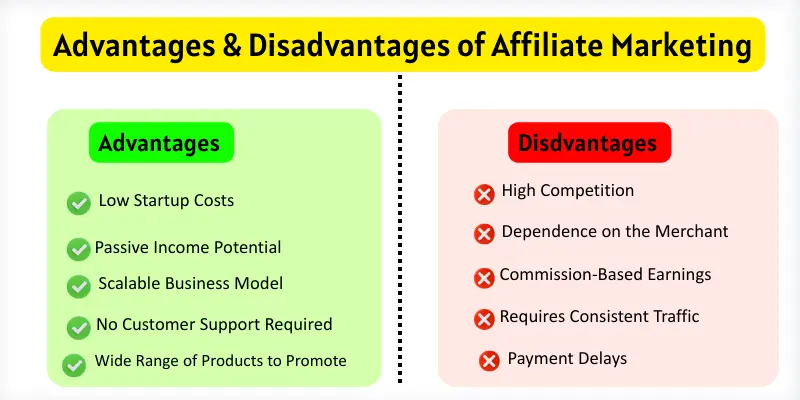
10 Advantages of Affiliate Marketing
Affiliate marketing has become one of the most popular ways to earn online. It allows individuals to make money by promoting products without creating their own. Here are the 10 key advantages of affiliate marketing:

- Low Startup Costs
- Passive Income Potential
- Flexibility and Freedom
- Performance-Based Earnings
- Wide Range of Products to Promote
- No Customer Support Required
- Scalable Business Model
- Easy to Track Performance
- Opportunity to Learn Digital Marketing Skills
- Work from Anywhere
Let’s start to discussthe benefits of affiliate marketing in detail
1. Low Startup Costs
Affiliate marketing lets you start earning without investing much money. You don’t need to create products or rent a store. All you need is a computer or phone and internet access.
Some common ways to start:
- Join Affiliate Programs: Many are free to join.
- Promote Products Online: Use blogs, YouTube, or social media.
- Minimal Tools Needed: A website or an email list is enough to get started.
2. Passive Income Potential
You can earn money even when you are not actively working. Once your content is online, people can buy through your links at any time.
Ways to earn passively:
- Blog Posts: Write once, earn multiple times.
- Video Reviews: Record videos promoting products.
- Email Campaigns: Send automated emails with affiliate links.
3. Flexibility and Freedom
You can work from anywhere and choose your own schedule. No office or boss limits your time.
Ways to enjoy flexibility:
- Work from Home: Complete tasks at your comfort.
- Choose Your Hours: Work mornings, nights, or weekends.
- Travel While Working: Promote products even when you are away.
4. Performance-Based Earnings
You earn based on the sales or actions you generate. The harder you work, the more you can earn.
Ways earnings are calculated:
- Pay-Per-Sale: Earn a percentage of each sale.
- Pay-Per-Click: Get paid for clicks on your links.
- Pay-Per-Lead: Earn when someone signs up through your link.
5. Wide Range of Products to Promote
You can choose from thousands of products or services. This allows you to focus on things you like.
Options include:
- Technology Products: Laptops, software, apps.
- Health Products: Supplements, fitness programs.
- Education Courses: Online classes or training programs.
6. No Customer Support Required
The merchant handles product delivery, complaints, and refunds. You just focus on promoting.
Tasks handled by merchants:
- Product Delivery: They ship or provide digital downloads.
- Customer Complaints: You don’t need to answer questions.
- Refunds and Returns: They manage it directly.
7. Scalable Business Model
You can grow your affiliate business without huge investments. The more effort you put, the higher your income.
Ways to scale:
- Promote More Products: Add multiple products in your niche.
- Use Multiple Channels: Blog, social media, YouTube.
- Hire Help: Outsource content creation as your business grows.
8. Easy to Track Performance
Affiliate programs provide dashboards to see how well your links are performing. You can measure clicks, sales, and commissions.
Ways to track:
- Affiliate Dashboards: Check clicks, leads, and earnings.
- Analytics Tools: Use Google Analytics for detailed tracking.
- Performance Reports: Identify which campaigns work best.
9. Opportunity to Learn Digital Marketing Skills
While earning, you automatically learn valuable marketing skills. These skills can also help with other online businesses.
Skills you can learn:
- SEO (Search Engine Optimization): Rank your content on Google.
- Email Marketing: Build a list and promote effectively.
- Social Media Marketing: Promote products on Instagram, TikTok, or YouTube.
10. Work from Anywhere
All you need is a device and an internet connection. You are not tied to any location.
Ways to enjoy this freedom:
- Laptop or Phone: Work using either device.
- Travel-Friendly: Earn money while exploring new places.
- No Office Needed: Your workspace can be anywhere.
10 Disadvantages of Affiliate Marketing
While affiliate marketing can be a great way to earn online, it also comes with some challenges. Knowing the 10 disadvantages of affiliate marketing can help you avoid common mistakes and succeed faster.

- High Competition
- Dependence on the Merchant
- Commission-Based Earnings
- Requires Consistent Traffic
- Learning Curve for Beginners
- Payment Delays
- Limited Control Over Products
- Risk of Affiliate Program Closure
- Technical Challenges
- Potential for Low Profit Margins
So, guys, let’s discuss the challenges of affiliate marketing in detail
1. High Competition
Many people promote the same products online, making it hard to get noticed. Beginners may struggle to stand out at first.
Some common challenges are:
- Too Many Affiliates: Many promote the same products.
- Difficulty in Ranking: Hard to appear in search engines.
- Need for Unique Content: Must create special content to succeed.
2. Dependence on the Merchant
Your earnings depend on the affiliate program and merchant rules. Any change by the merchant can affect your income.
Some examples:
- Changing Commission: They may reduce earnings.
- Program Rules: You must follow their guidelines.
- Product Availability: If products stop, your links stop working.
3. Commission-Based Earnings
You only earn when a sale or action is completed. No sale means no income.
Common issues include:
- No Guarantee: Not every click converts to money.
- Low Sales Initially: Beginners may earn little at first.
- Payment Only After Action: Must wait for confirmed sales.
4. Requires Consistent Traffic
Without regular visitors, you cannot make sales. You need a steady audience.
Some challenges are:
- Building Visitors Takes Time: Growth is slow at first.
- Need for Promotion: Must share content often.
- Audience Engagement: People need to trust and click your links.
5. Learning Curve for Beginners
Affiliate marketing requires marketing, writing, and tech skills. Beginners may find it confusing.
Common learning needs:
- SEO Skills: Learn how to rank content.
- Content Creation: Writing blogs, posts, or reviews.
- Marketing Knowledge: Know how to promote products effectively.
6. Payment Delays
Some programs pay monthly or after a minimum earning limit. You may not get immediate income.
Some examples:
- Waiting Period: Must wait for payout cycles.
- Minimum Threshold: Only receive money after a limit.
- Delayed Earnings: Payments may take weeks to arrive.
7. Limited Control Over Products
You cannot control product quality or delivery. Bad products may hurt your reputation.
Some problems are:
- Poor Product Quality: Customers may complain.
- Returns or Refunds: Handled by the merchant, but affects trust.
- Negative Reviews: Can reflect on you if the product fails.
8. Risk of Affiliate Program Closure
Programs may close or change rules suddenly. Your income can stop unexpectedly.
Some risks are:
- Program Shutdown: Earnings stop immediately.
- Policy Changes: May lose commissions or benefits.
- Dependence on One Program: Risky if you rely on a single source.
9. Technical Challenges
Beginners may face difficulty with websites, links, or marketing tools.
Some common challenges:
- Website Setup: Hard for beginners without experience.
- Tracking Links: Need tools to track clicks and sales.
- Using Marketing Tools: Learning new tools takes time.
10. Potential for Low Profit Margins
Some products offer small commissions, so you need many sales to earn enough.
Some examples are:
- Low Commissions: Small income per sale.
- High Sales Needed: Must sell many products.
- Profit Depends on Effort: More work is required for reasonable earnings.
Conclusion
So, friends, now let’s finish up! In this post, we have covered the advantages and disadvantages of affiliate marketing in detail. Personally, I believe affiliate marketing is a great way to start earning online, but only if you are patient and willing to learn. Start small, choose quality products, and focus on building your audience. Take action today and start your affiliate journey wisely!
FAQs about the pros and cons of affiliate marketing
Here are some common questions about the benefits and challenges of affiliate marketing.
No, a website is not always necessary. You can promote products on social media, YouTube, or email lists. However, having a website makes it easier to build trust and attract visitors.
Yes, it is beginner-friendly, but you need to learn basic skills like writing content, promoting products, and using social media. Starting small and choosing simple programs helps beginners succeed. Consistency is the key to growing your affiliate income.
Yes, some risks include high competition, dependence on the merchant, and payment delays. You may also face technical challenges or low profit margins at first. Choosing trusted programs and learning the process reduces these risks.
No, you do not need to buy products to promote. You can join affiliate programs and share your special links with your audience. Your commission comes from sales generated through your links, not personal purchases.

- Be Respectful
- Stay Relevant
- Stay Positive
- True Feedback
- Encourage Discussion
- Avoid Spamming
- No Fake News
- Don't Copy-Paste
- No Personal Attacks
- Be Respectful
- Stay Relevant
- Stay Positive
- True Feedback
- Encourage Discussion
- Avoid Spamming
- No Fake News
- Don't Copy-Paste
- No Personal Attacks
