Digital Marketing Learning Roadmap for Beginners
Published: 19 Dec 2025
Hey friends! Did you know that millions of people want to learn digital marketing every year? But most of them stop in the middle because they do not know where to begin. Digital marketing has many parts, like SEO, social media, content, email, and paid ads. It can feel confusing if you try to learn everything at once.
That is why having a clear digital marketing learning roadmap is very important. With the proper roadmap, you can learn step by step. You will know what to learn first, then what comes next, and how to practice each skill.
Even if you are a complete beginner, this guide will make learning simple, fun, and easy. By following it, you will never feel lost or confused while learning digital marketing.
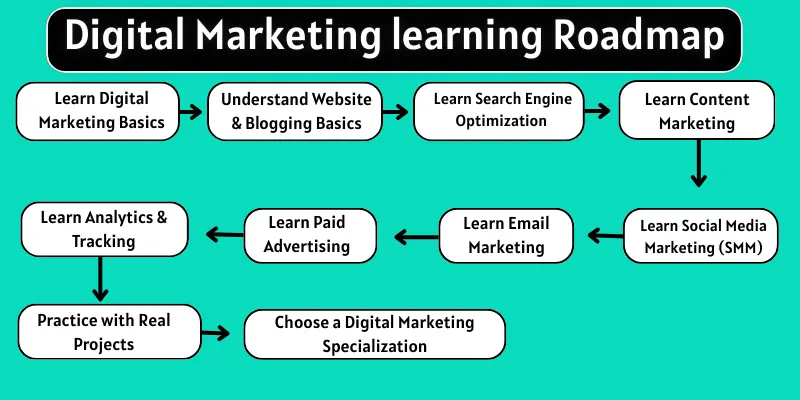
10 basic digital marketing learning roadmap steps
Learning digital marketing can feel confusing at first. But with a clear digital marketing learning roadmap, you can follow the proper steps and learn easily.
- Learn Digital Marketing Basics
- Understand Website & Blogging Basics
- Learn Search Engine Optimization (SEO)
- Learn Content Marketing
- Learn Social Media Marketing (SMM)
- Learn Email Marketing
- Learn Paid Advertising (Google & Social Ads)
- Learn Analytics & Tracking
- Practice with Real Projects
- Choose a Digital Marketing Specialization
Let’s go! Now we will understand these 10 steps one by one, so you can easily learn digital marketing!
1. Learn Digital Marketing Basics
Digital marketing is all about promoting businesses, products, or services online. It helps people find a business on Google, social media, or websites.
Digital marketing has different parts. Each part does an important job:
- SEO (Search Engine Optimization): Shows your website on Google.
- Content Marketing: Creates blogs, videos, and images to attract people.
- Social Media Marketing: Shares content on Facebook, Instagram, LinkedIn, and more.
- Email Marketing: Sends messages to keep people up to date.
- Paid Advertising: Shows ads on Google, Facebook, or other platforms to reach more people.
When you understand these parts, you know how digital marketing works. You can learn each skill step by step. Think of this as building a strong base.
2. Understand Website & Blogging Basics
A website is like your online home. It shows your business or ideas to people online. A blog is a part of a website where you share helpful articles, stories, or tips.
When you know how websites and blogs work, you can reach more people and make them interested in your business or content.
Important Things to Know
- Domain: The name of your website (e.g., www.example.com).
- Hosting: This keeps your website online so people can visit it.
- Pages: These are different sections of your website (Home, About, Contact).
- Blog Posts: Articles you write to share information or help people.
Websites and blogs help people find you easily. They also make your business or ideas look professional. Once you understand this, learning other digital marketing skills becomes much easier.
3. Learn SEO (Search Engine Optimization)
SEO means making your website easy to find on Google. When people search for something you offer, SEO helps your website appear at the top of the search results.
SEO has a few main parts that you should know:
- On-Page SEO: Improving your website pages. You use the right words, titles, and images so Google understands your content.
- Off-Page SEO: Getting other websites to link to your site. It tells Google that your website is useful and trustworthy.
- Technical SEO: Ensures your website loads quickly and workscorrectly. It helps Google read your website easily.
Learning SEO helps people find your website without paying for ads. Start slowly, practice each part, and you will see your website appear higher in search results.
4. Learn Content Marketing
Content marketing helps you share helpful content, such as blog posts, videos, or images. It lets people know about your business or ideas and trust you.
To do content marketing well, you need to learn some important skills:
- Blogs: Write helpful articles that teach or inform people.
- Videos: Create and edit videos to clearly explain your ideas.
- Images: Create attractive pictures for your content.
- Keyword Research: Find the right words people search for online.
- Planning: Decide what content to share and when to share it.
Good content makes people visit your website or social media again and again. Always focus on creating content that helps people. Start simple, and gradually create more content as you practice.
5. Learn Social Media Marketing
Social media marketing helps you share your content and ideas with people on platforms like Facebook, Instagram, LinkedIn, and YouTube. It makes people notice your business or work.
To do it well, you should learn some essential skills:
- Post content regularly: share blogs, videos, and images.
- Engage with People: Reply to comments and messages.
- Plan Posts: Decide what to share and when to share it.
- Use Hashtags: Help more people find your content.
- Analyze Performance: Check which posts people like the most.
Social media marketing helps you connect with more people. Always focus on sharing content that helps or entertains your audience. Start slowly, learn the platforms, and improve as you go.
6. Learn Email Marketing
Email marketing helps you communicate directly with your audience. It keeps people up to date on your business, products, or content.
To do email marketing well, you should learn these skills:
- Build an Email List: Collect emails from people who want to hear from you.
- Write Good Emails: Make your emails helpful, simple, and enjoyable.
- Send Regular Emails: Keep your audience engaged with updates or tips.
- Use Tools: Learn tools like Mailchimp or ConvertKit to send emails easily.
- Check Results: See how many people open and read your emails.
Email marketing helps you stay connected with your audience. Always send emails that help or inform people. Start small and practice regularly to get better.
7. Learn Paid Advertising (Google & Social Ads)
Paid advertising helps you reach more people quickly with your business, products, or content. You pay a small amount to reach people on Google, Facebook, Instagram, or other platforms.
To do paid advertising well, you should learn these skills:
- Create Ads: Make simple and clear ads with pictures, videos, or text.
- Target Audience: Choose the right people who will see your ads.
- Budget Management: Decide how much money to spend on ads.
- Monitor Results: Identify which ads perform best and attract more people.
- Improve Ads: Adjust ads based on results.
Paid advertising helps you reach more people faster than organic methods. Start slowly, learn one platform at a time, and practice to improve.
8. Learn Analytics & Tracking
Analytics helps you understand how well your digital marketing is working. It tells you which posts, ads, or content people like the most. Tracking enables you to see what needs improvement.
To use analytics well, you should learn these skills:
- Google Analytics: See how many people visit your website and what they do.
- Social Media Insights: Check your post’s likes, comments, and shares.
- Ad Reports: See which ads bring the most results.
- Set Goals: Know what you want to achieve, like more website visitors or sales.
- Make Changes: Use the data to improve your content, ads, or posts.
Analytics and tracking help you make smarter decisions. Always check results regularly and improve your strategy.
9. Practice with Real Projects
Learning digital marketing is easy when you practice with real projects. Doing real work helps you understand how things work in the real world.
Here are some ways to practice:
- Create Your Own Blog or Website: Try writing posts, adding images, and sharing content.
- Run Small Ads: Make simple ads on Google or Facebook to see how paid advertising works.
- Manage Social Media Pages: Post content, reply to comments, and engage with followers.
- Work on Mini Projects: Try helping a friend, family member, or small business with digital marketing.
- Test Your Skills: Track results and see what works best.
Practicing with real projects helps you learn faster and remember better. Start small, make mistakes, and improve step by step.
10. Choose a Digital Marketing Specialization
After learning all the basics, it’s time to choose a part of digital marketing to focus on. Specializing helps you become really good in one area and get better results.
Here are some options you can choose from:
- SEO Specialist: Focus on helping websites appear on Google.
- Content Creator: Write blogs, make videos, and create images.
- Social Media Manager: Share content and engage with followers.
- Email Marketing Expert: Send useful emails and keep your audience engaged.
- Paid Ads Manager: Run ads on Google, Facebook, or Instagram to reach more people.
- Analytics Expert: Track data and help businesses improve their results.
Pick the area you enjoy the most and practice it. Becoming a specialist will help you grow faster and use your skills confidently.
Conclusion
So, friends, we are almost done. In this post, we covered the digital marketing learning roadmap in detail. I personally recommend starting from the basics and practicing each step slowly. Take your time, and don’t rush. The more you practice, the better you will get. Now, it’s your turn! Start following this roadmap today and take your first step in digital marketing!
FAQs about the digital marketing learning roadmap
No, you can start with free tools online. Free tools are enough for practice and learning. Paid tools help when you grow your skills.
Pick the platform where your audience spends most of their time. For example, Instagram for young people, LinkedIn for professionals. Focus on one or two platforms at first.
Yes! You can learn from home using the internet. Online blogs, videos, and free courses make it easy.
Try to practice every day or a few times a week. Small daily practice is better than one big effort. It helps you remember everything.
Yes, a computer or laptop is best for learning. Some tasks can be done on a phone. But a computer makes creating content and running ads easier.

- Be Respectful
- Stay Relevant
- Stay Positive
- True Feedback
- Encourage Discussion
- Avoid Spamming
- No Fake News
- Don't Copy-Paste
- No Personal Attacks
- Be Respectful
- Stay Relevant
- Stay Positive
- True Feedback
- Encourage Discussion
- Avoid Spamming
- No Fake News
- Don't Copy-Paste
- No Personal Attacks
